How to Choose the Right Surgical Set for Your Medical Practice?
Selecting the appropriate surgical set for a medical practice is crucial for both efficiency and patient safety. A study by the American College of Surgeons indicates that improper instrument selection can lead to increased surgical times and complications. In this context, expert Dr. Emily Hart, a leading voice in surgical instrumentation, states, "The right surgical set can be the difference between a smooth procedure and a prolonged recovery."
Surgical sets should align with the specific needs of each practice. Factors such as the type of surgeries performed and the volume of cases play a significant role. Moreover, customization options are essential. Many manufacturers now offer tailored solutions, reflecting an ongoing trend in the industry. However, selecting the wrong set can be detrimental, leading to wasted resources and training challenges.
It's vital to stay informed about the latest advancements in surgical sets. Continuous education on available instruments can enhance both surgical outcomes and operations. As the landscape of surgery evolves, reflecting on past selections can lead to better decisions in the future. Prioritizing quality and suitability can significantly impact patient care.

Factors to Consider When Selecting Surgical Sets for Medical Practices
Choosing the right surgical set for your medical practice involves careful consideration of several factors. Start by assessing the specific surgical procedures you perform. Each specialty has distinct requirements. General surgery may need different instruments than orthopedic or plastic surgery. Analyze past surgeries to identify any missing tools that could enhance your efficiency.
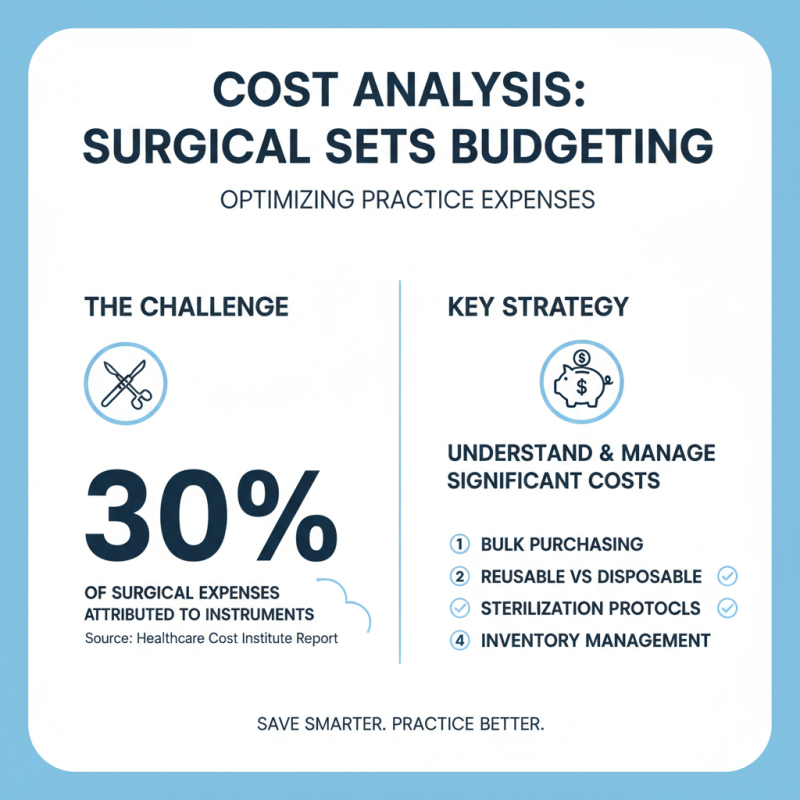
Quality matters significantly when selecting surgical sets. Look for sets made from durable materials. Stainless steel instruments typically ensure longevity and reliability. However, cost is also an important factor. Some practices struggle with tight budgets. Finding a balance between quality and affordability can be challenging. Research suppliers thoroughly to understand their reputation.
Another key aspect is the level of customization. Customized surgical sets can improve outcomes, but they might come at a premium. Some practices find it hard to justify this expense. Consult with surgical staff to get their insights. Their experience can provide valuable perspectives on what instruments are truly necessary. Ensuring that the set aligns with your team's needs can lead to smoother surgeries. There may be principles in choosing sets that need revisiting over time. Regularly assess whether the instruments are still the best fit for your evolving practice.
Importance of Specialty-Specific Instruments in Surgical Sets
In surgical procedures, the choice of instruments can greatly impact outcomes. Specialty-specific instruments are critical in ensuring a successful operation. Each discipline in medicine has unique requirements. These tools are designed to cater to specific procedures, enhancing precision and effectiveness.
When selecting a surgical set, consider the specialized nature of your practice. General instruments may not suffice for intricate surgeries. For example, orthopedic procedures require tools that are robust and precise. In contrast, minimally invasive surgeries utilize different instruments for better maneuverability. Proper selection improves efficiency but requires understanding each specialty's demands.
However, acquiring the right instruments poses challenges. Not all practices have the same needs, leading to potential oversights. It's essential to periodically review your surgical set to ensure relevance. Many practitioners overlook the importance of continuing education on new instruments. Keeping up with advancements can prevent outdated practices and enhance surgical outcomes.
Importance of Specialty-Specific Instruments in Surgical Sets
Evaluating Quality and Sterility Standards in Surgical Instruments
When selecting surgical instruments, quality and sterility are paramount. According to a recent report from the World Health Organization, about 1 in 10 patients undergoing surgery experience an infection. This highlights the need for rigorous quality evaluations. Instruments must meet established sterilization standards to minimize infection risks. Even slight lapses can lead to severe consequences.
Evaluating sterility involves several key factors. Instruments should undergo validated sterilization processes. The Association for the Advancement of Medical Instrumentation recommends both ethylene oxide and steam sterilization methods. Inadequate sterilization can compromise patient safety. Studies show that up to 30% of instrument reprocessing fails standards, emphasizing the need to choose sets from reputable sources.
Incorporating user feedback can also be beneficial. Healthcare professionals often report their experiences with specific instruments. Insights gained can provide real-world data on performance and reliability. Regular audits of sterilization processes can reveal areas needing improvement. This ongoing evaluation fosters a culture of safety and efficiency in surgical practices.
Training and Support Services for Effective Surgical Set Utilization
Effective surgical set utilization hinges on comprehensive training and support services. According to a report from the American College of Surgeons, hospitals that prioritized training showed a 30% reduction in surgical errors. Continuous education ensures that medical staff are familiar with each instrument in the set, leading to better patient outcomes.
Utilizing surgical sets effectively requires team collaboration. Training programs must address both the technical skills and the operational protocols associated with surgical procedures. Many practices fall short in this area, as highlighted by studies indicating that only 50% of surgical teams have structured training sessions. The lack of standardized methods can lead to confusion, delays, and increased risks during surgeries.
Support services can further enhance the efficacy of surgical sets. Regular audits and feedback loops can identify gaps in knowledge and application. According to the Journal of Surgical Education, institutions that implemented ongoing support saw a 25% improvement in surgical efficiency. This highlights the need for practices to not only equip their teams with tools but also to empower them through continual training and resources.
How to Choose the Right Surgical Set for Your Medical Practice?
| Criteria |
Description |
Importance Rating (1-5) |
| Surgical Specialty |
Choose sets specific to your specialty (e.g., orthopedic, general surgery). |
5 |
| Quality of Instruments |
Ensure high-quality, durable instruments are included. |
5 |
| Package Customization |
Ability to customize sets according to specific surgical procedures. |
4 |
| Training Support |
Availability of training on effective utilization of the surgical set. |
4 |
| Cost Efficiency |
Assessment of cost versus benefits of the surgical set. |
3 |
| Supplier Reputation |
Consideration of the supplier's track record and reviews from peers. |
4 |