
China Top 10 808 Nm Diode Laser Manufacturers

China’s 808 Nm Diode Laser industry serves medical, cosmetic, research, and industrial applications. This wavelength is widely valued for its absorption behavior and practical tissue penetration. However, selecting a reliable supplier requires more than comparing catalog prices.

This guide introduces China’s top 10 808 Nm Diode Laser manufacturers through measurable and practical criteria. These include manufacturing experience, diode packaging, output stability, cooling design, optical uniformity, and quality control. A dependable manufacturer should provide clear technical specifications, test reports, warranty terms, and responsive engineering support. Factory audits, sample testing, and production records can reveal details that brochures often hide. Small details matter.

For example, buyers should examine beam divergence, operating temperature, pulse control, and lifetime testing. Medical users may also need documentation aligned with applicable safety and regulatory requirements. Industrial customers may focus more on continuous-wave stability, integration flexibility, and delivery consistency. Different projects require different evidence.

The selected companies should not be judged by reputation alone. Independent verification remains important. Public information may be incomplete, and rankings can change as product lines and certifications develop. This is one limitation of any “top 10” list. Readers should confirm current certificates, factory capabilities, and after-sales policies before making a final decision.

With careful comparison, this overview can help buyers identify suitable Chinese suppliers for an 808 Nm Diode Laser project. Performance comes first. Price is only one part of the decision.
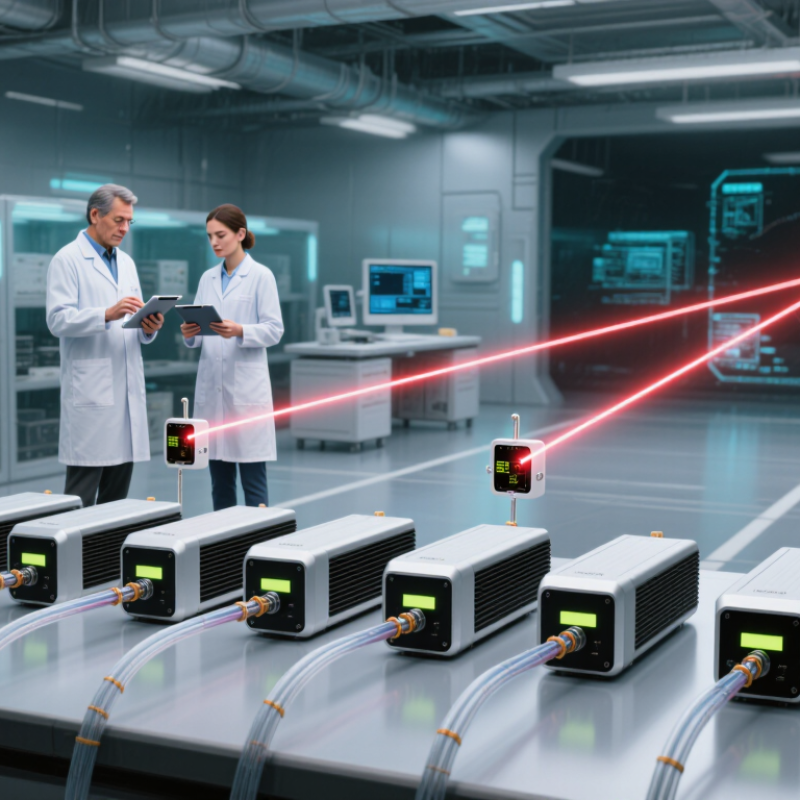
China Top 10 808 Nm Diode Laser Manufacturers

Understanding 808 nm Diode Laser Technology

Understanding 808 nm Diode Laser Technology

An 808 nm diode laser emits near-infrared light, which is invisible to the human eye. Its wavelength suits pumping solid-state lasers and selected photobiological equipment. Semiconductor composition, cavity design, and facet treatment influence efficiency and service life. In practical testing, stable output matters more than impressive peak power. A strong module should maintain its wavelength under changing temperature and current.

Thermal management is critical. Even a small diode can produce substantial heat during continuous operation. Copper submounts, thermoelectric cooling, and carefully matched drivers help reduce wavelength drift. Beam shape also deserves attention. Some modules produce elliptical beams, while others use lenses for improved focus. A datasheet may look complete, yet it cannot replace measured performance. Pulse width, optical power, spectral tolerance, and operating lifetime need independent verification. Real conditions are rarely perfect.

Tips: Check the wavelength tolerance, not only the nominal 808 nm value. Ask for test data at the intended current and temperature. Inspect solder quality, connector design, and cooling contact. Keep protective eyewear and interlock systems appropriate for invisible infrared radiation. Avoid selecting a device by price alone. A cheaper module may require better cooling, creating hidden costs. Also, review quality records from the manufacturer, while remembering that even reliable data can contain testing limits.

Key Applications of 808 nm Diode Lasers

808 nm diode lasers are widely used in professional aesthetic clinics. Their main role is long-term hair reduction. The wavelength reaches melanin-rich follicles with controlled optical energy. Heat damages the follicle while cooling systems protect the surrounding skin. Skin tone, hair thickness, pulse width, and treatment spacing affect results. Patch testing remains practical, not decorative. Qualified operators should record settings and monitor skin responses during every session.

Beyond aesthetics, 808 nm systems support photobiomodulation research and selected therapeutic investigations. Carefully controlled exposure may influence cellular activity, circulation, and tissue recovery. Evidence varies by condition and treatment protocol. That uncertainty matters. Medical teams need defined endpoints and consistent follow-up records. Some users expect one session to solve everything. That expectation is often wrong. Hair growth cycles create uneven results, even when the equipment performs correctly.

In manufacturing, 808 nm emitters commonly act as pump sources for solid-state laser systems. They also support controlled heating, sensing, and laboratory experiments. Optical alignment, thermal management, and diode uniformity determine system stability. A small temperature rise can shift output and reduce efficiency. This detail is easy to underestimate. Specifications alone do not guarantee field performance; integration quality often decides the outcome. Practical testing may expose compromises that laboratory data misses.

China Top 10 808 Nm Diode Laser Manufacturers - Key Applications of 808 nm Diode Lasers

No. Application Category Typical Output Range Operating Mode Typical Pulse or Exposure Common Beam Delivery Primary Technical Requirement
1 Hair Removal Systems 10–2,400 W optical output Continuous wave or quasi-continuous wave 10–400 ms pulses; fluence commonly specified in J/cm² Handpiece with sapphire or contact cooling Stable wavelength, controlled skin temperature, and uniform spot delivery
2 Photobiomodulation and Low-Level Light Therapy 50 mW–10 W optical output Continuous wave or pulsed Seconds to several minutes per treatment area Fiber, collimated aperture, or LED/laser array Accurate irradiance, dose control, and low thermal loading
3 Dental and Soft-Tissue Laser Equipment 0.5–15 W optical output Continuous wave, gated, or pulsed 0.1–1,000 ms pulses, depending on procedure Surgical fiber or detachable handpiece Precise power calibration, thermal management, and sterilizable delivery
4 Pump Sources for Solid-State Lasers 10 W–1 kW per module or stack Continuous wave or QCW Microseconds to continuous operation Fiber-coupled, free-space, or diode-stack optics High wall-plug efficiency, wavelength stability, and reliable cooling
5 Industrial Heating and Plastic Welding 20 W–2 kW optical output Continuous wave or modulated output Millisecond to continuous exposure Line beam, homogenized spot, or scanning head Uniform energy distribution, process-speed control, and repeatability
6 Machine Vision and Near-Infrared Illumination 0.1–20 W optical output Continuous wave or electronically modulated Microseconds to continuous illumination Diffused line, structured-light module, or collimated beam Low speckle, stable intensity, and synchronized modulation
7 Spectroscopy and Analytical Instruments 10 mW–5 W optical output Continuous wave or current-modulated Microseconds to continuous measurement Fiber-coupled or free-space optical path Narrow spectral bandwidth, low noise, and long-term power stability
8 Fiber-Optic Sensing and Distributed Monitoring 10 mW–2 W optical output Continuous wave or pulsed Nanoseconds to continuous operation Single-mode or multimode fiber coupling Low relative intensity noise, coupling efficiency, and wavelength control
9 Photodynamic and Photoactivated Medical Devices 0.1–10 W optical output Continuous wave or controlled pulsed output Seconds to several minutes, protocol dependent Diffuser fiber, surface applicator, or collimated handpiece Accurate dose delivery, thermal monitoring, and treatment uniformity
10 Research, Education, and OEM Instrumentation 5 mW–100 W optical output Continuous wave, pulsed, or externally modulated Nanoseconds to continuous operation Bare diode, fiber-coupled module, or laboratory mount Flexible control, interchangeable optics, and accessible monitoring interfaces

Note: The specifications shown are representative industry ranges for 808 nm diode-laser systems. Actual performance depends on package design, thermal management, optical coupling, duty cycle, regulatory requirements, and application-specific system configuration.

How to Evaluate Chinese Diode Laser Manufacturers

When evaluating Chinese 808 nm diode laser manufacturers, look beyond headline power and price. Request a datasheet stating wavelength tolerance, output power, operating current, and test conditions. Numbers need context. Ask whether measurements were taken at room temperature or after the module reached thermal equilibrium. A clearly described test setup is more useful than an impressive chart.

Check how the manufacturer controls assembly and quality. Ask for sample inspection records, calibration methods, burn-in results, and traceability by production lot. If possible, compare a delivered sample’s output and beam profile with the quoted specifications using suitable test equipment. Ask for evidence. Also review cooling requirements, connector details, warranty terms, and technical support response times. These practical details can reveal problems before installation. A video tour may help, but it cannot replace documented checks. That matters.

Be cautious with broad lifetime claims that lack test conditions or failure data. Request reports for the exact module configuration you plan to buy, not just a similar product. Compare suppliers using the same checklist, then verify key claims independently when the project allows. This takes time. It is still easy to miss a detail, especially when specifications use different measurement methods, so record unanswered questions before placing an order.

Profiles of 10 Leading 808 nm Diode Laser Manufacturers in China

China’s 808 nm diode laser sector includes manufacturers with different strengths, equipment, and quality systems. These ten profiles highlight practical differences rather than simple ranking.

Profile one focuses on high-power modules for medical and industrial systems. Profile two specializes in compact emitters for portable devices. Profile three offers stacked arrays with controlled thermal design. Profile four develops fiber-coupled packages for stable beam delivery. Profile five emphasizes customized wavelengths and output configurations.

Profile six is known for automated assembly and repeatable production. Profile seven supports research laboratories with flexible prototypes. Profile eight concentrates on long-life components and burn-in testing. Profile nine provides integrated drivers, cooling parts, and technical support. Profile ten serves volume buyers with standardized packages and documented inspection records. These descriptions need verification. Marketing language can sound stronger than actual test data. Buyers should request wavelength tolerance, output stability, lifetime results, and recent quality records.

Tips: Compare tested performance, not catalog power alone. Ask for thermal resistance and operating conditions. Check whether samples match mass-production units. A clear warranty matters. So does responsive engineering support. If possible, inspect the factory or review independent test reports before signing a supply agreement. Even experienced buyers can miss connector details, coating limits, or unstable performance during continuous operation.

China’s 808 nm Diode Laser Manufacturers: Technical Wavelength Context

This chart compares photon energies for commonly used diode-laser wavelengths. Values are calculated from E = hc/λ and rounded to three decimal places; they are technical reference values, not company or product performance data. An 808 nm photon has an energy of approximately 1.535 eV.

Comparing Manufacturer Capabilities and Product Offerings

China’s top ten 808 nm diode laser manufacturers differ more in capability than in catalog size. Grand View Research’s 2024 Laser Diode Market report projects a double-digit growth rate through 2030. This demand favors suppliers with stable output, repeatable testing, and flexible production.

A serious comparison should examine wavelength tolerance, wall-plug efficiency, and thermal resistance. Continuous-wave modules suit medical and pumping systems. Quasi-continuous-wave stacks support short, high-power pulses. Fiber-coupled packages improve beam delivery, but connector quality remains critical. Some suppliers offer single emitters, bars, stacks, and complete modules. Others focus mainly on custom assemblies.

Thermal design matters.

Yole Group’s 2024 semiconductor laser analysis highlights industrial, healthcare, and communication applications as major demand areas. Buyers should review burn-in hours, power drift, aging data, and test traceability. A factory with automated alignment may provide better consistency than one relying heavily on manual assembly. Still, automation alone proves little.

Public rankings are imperfect. Some factories disclose limited failure-rate data, which makes direct comparison difficult. Requesting sample test curves, temperature-sweep results, and packaging drawings can reveal practical differences. Delivery capacity also deserves attention. A technically strong supplier may struggle with urgent volume increases, while a larger producer may offer fewer wavelength or fiber options. Manufacturer capability is therefore best judged through verified samples, documented processes, and application-specific evidence.