10 Best Medical Implant Manufacturers for Global Buyers
Choosing a medical implant manufacturer requires more than comparing product catalogs or polished websites. Global buyers must examine engineering quality, clinical evidence, regulatory records, and supply reliability. A titanium trauma screw may look simple, yet its coating, thread design, sterilization method, and packaging can affect surgical outcomes. Hip and knee implants demand even closer review, especially around wear resistance, material traceability, and long-term performance.
This guide examines ten leading manufacturers serving international markets. The evaluation considers product breadth, manufacturing controls, innovation, clinical support, and experience with cross-border distribution. Certifications such as ISO 13485 can indicate a mature quality system, but they should not replace independent verification. Buyers should also confirm market-specific registrations, authorized distributors, complaint procedures, and post-market surveillance responsibilities. Requirements differ across the United States, Europe, Asia, and other regions.
No ranking is perfect. Public information often highlights success while revealing little about delayed shipments, revision rates, or communication problems. That limitation deserves attention. A reliable supplier should provide clear technical files, consistent batch records, and responsive answers when questions become difficult. Factory audits, surgeon feedback, and documented case experience can reveal practical strengths that brochures miss. The best choice may not be the largest company. It may be the manufacturer that matches a hospital’s clinical needs, budget, training capacity, and local compliance pathway. Careful comparison protects patients, purchasing teams, and long-term partnerships.
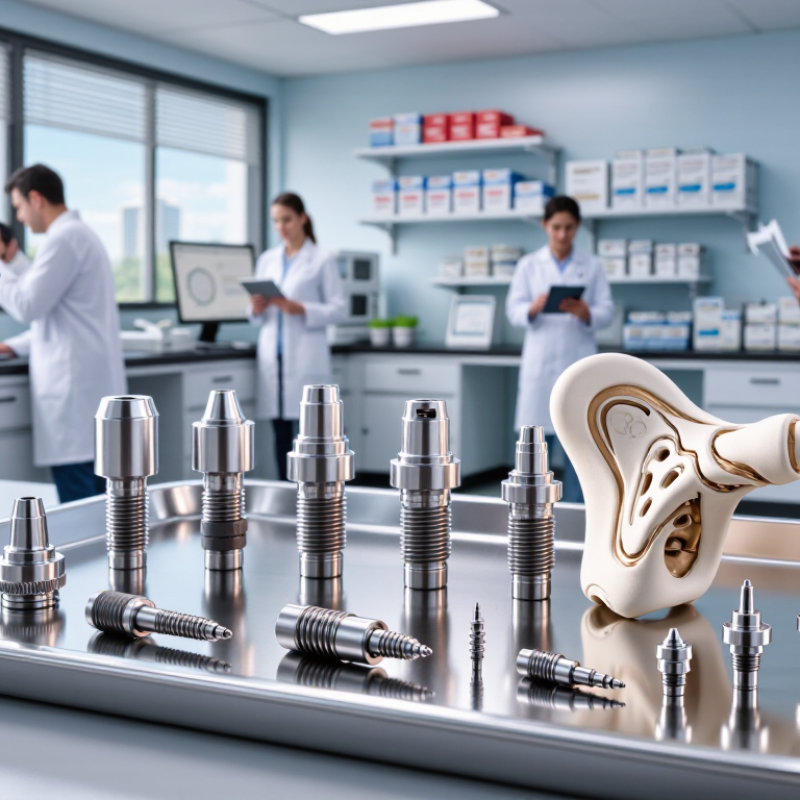
Medical Implant Manufacturers: Industry Scope and Product Categories
Medical Implant Manufacturers: Industry Scope and Product Categories
The medical implant industry covers design, biomaterials, precision manufacturing, sterilization, and long-term clinical support. Its products include orthopedic implants, dental fixtures, cardiovascular devices, ophthalmic implants, and neurological systems. Orthopedic categories often use titanium, cobalt-chrome alloys, ceramics, or PEEK for strength and compatibility. Dental products require accurate geometry, surface treatment, and reliable integration with bone. Cardiovascular implants demand exceptional cleanliness, fatigue resistance, and controlled delivery systems.
Manufacturers also differ by production capability. Some specialize in custom implants made from patient imaging data. Others produce standardized components for hospitals and distributors. Important evaluation factors include ISO 13485 quality systems, risk management, material traceability, validated sterilization, and documented clinical evidence. Manufacturing equipment matters too. Laser powder-bed fusion can create complex structures, but every printed surface still requires careful inspection. No category is simple. A low price may hide limited testing, weak after-sales support, or difficult regulatory documentation.
Tips: Ask for material certificates, batch records, sterilization details, and quality audit results. Confirm whether the manufacturer supports the target market’s registration requirements. Request samples when appropriate, but do not judge performance from appearance alone. Check packaging integrity and shelf-life data. Procurement teams sometimes focus too heavily on unit cost; that approach can overlook training, revision risks, and supply continuity. A balanced review should compare clinical suitability, manufacturing control, communication speed, and evidence quality.
Top Medical Implant Manufacturers and Their Core Specialties
10 Best Medical Implant Manufacturers for Global Buyers
Top Medical Implant Manufacturers and Their Core Specialties
Medical implant suppliers usually build deep expertise in one clinical field. Orthopedic specialists focus on hip, knee, spine, and trauma systems. Dental specialists develop titanium fixtures, abutments, and digital restoration workflows. Cardiovascular manufacturers concentrate on stents, valves, and implantable rhythm devices. Other leading producers serve ophthalmology, neurosurgery, and reconstructive medicine. Each specialty demands different materials, testing methods, and surgeon training.
Fortune Business Insights’ 2024 Medical Implants Market report estimates continued growth in global demand, driven by aging populations and chronic disease. The WHO Global Report on Assistive Technology states that more than 2.5 billion people need at least one assistive product. Implants represent only part of that need, but the figure shows the scale of unmet healthcare demand. Buyers should examine clinical evidence, sterilization controls, traceability, and after-sales support, not just production volume.
A reliable manufacturer should provide clear technical files, validated manufacturing processes, and region-specific regulatory documentation. ISO 13485 certification is useful, but it does not replace product-specific evidence. Hospital experience matters too. Ask how the supplier handles revision surgery, difficult anatomy, and device complaints. Rankings can look exact, yet public market data often mixes implants with related equipment. I would treat market size as context, not proof of clinical superiority. Supplier comparisons still require careful review.
Regulatory, Quality, and Certification Considerations for International Buyers
Choosing among ten medical implant manufacturers requires more than comparing prices and polished websites.
International buyers should verify legal market access for the exact implant, not just the factory. Ask for current certificates, scope statements, and issuing-body details. A certificate with the wrong product category creates expensive delays. Check whether the manufacturer maintains ISO 13485 quality management. Review design controls, supplier qualification, complaint handling, and change-control records. Do not accept copied files.
Risk evidence matters at product level.
Request biocompatibility reports under relevant ISO 10993 parts, material traceability, sterilization validation, and packaging integrity data. For orthopedic or dental implants, inspect fatigue, wear, corrosion, and dimensional test methods. The report should identify samples, standards, laboratories, and acceptance criteria. Independent laboratory evidence is stronger than an internal summary. Still, “independent” does not always mean complete.
Regulatory pathways differ across markets.
Confirm registration duties, importer responsibilities, labeling language, unique device identification, and post-market surveillance requirements. Ask how adverse events are escalated and how recalls are tested. Audit preparation reveals real maturity. Can the supplier retrieve one lot’s records within hours? Can it explain a process change clearly? Perfect documentation is rare. That is a warning, not an automatic rejection. Buyers should record gaps, set corrective deadlines, and reassess after evidence arrives.
Global Supply, Customization, and After-Sales Support Factors
Choosing among the 10 best medical implant manufacturers requires more than comparing prices or catalog sizes. Global buyers should examine production records, quality systems, and regulatory experience in each target market. An ISO 13485-certified facility is useful evidence, but certification alone does not prove consistent performance. Buyers should review material traceability, sterilization controls, inspection reports, and complaint-handling procedures. Ask for recent audit evidence.
Global supply
depends on practical details. Can the manufacturer ship temperature-sensitive materials safely? Does it understand import documents, labeling rules, and local registration requirements? A reliable supplier should offer clear lead times, batch records, and secure packaging. Delays can affect surgery schedules, hospital inventory, and patient care. One overlooked customs document can create serious disruption. Buyers should test communication before signing a large contract.
Customization may include implant dimensions, surface treatment, packaging, or surgical instruments. Strong manufacturers involve clinical and engineering teams early. They should explain design limits, validation steps, and expected costs without making unrealistic promises. After-sales support also matters. Look for training, replacement procedures, technical response times, and long-term product tracking. No supplier is perfect. Even experienced teams can miss a specification during revisions. A written change-control process reduces that risk. Buyers should keep questioning assumptions, especially when a supplier’s delivery promise sounds unusually easy.