
China Top 10 Stainless Steel Orthopedic Implant Suppliers
Choosing reliable suppliers matters when a device enters the human body. China’s orthopedic manufacturing sector includes experienced producers of stainless steel orthopedic implants, precision components, and surgical instruments. However, supplier claims should never replace independent verification.
This guide introduces ten notable Chinese suppliers connected with stainless steel orthopedic implants. It considers manufacturing experience, material control, quality systems, customization, and export support. Practical details matter. A serious supplier should explain its implant-grade steel, heat-treatment records, surface-finishing process, and batch traceability. It should also provide clear documentation, including inspection reports and applicable certifications.
Look closely.
A polished website proves little. Buyers should review ISO 13485 certification, quality-control procedures, testing capacity, and production experience with comparable devices. Factory audits can reveal details that brochures omit, such as cleanroom discipline, calibration practices, packaging controls, and staff training. Samples should be assessed for dimensions, markings, surface defects, corrosion resistance, and compatibility with intended clinical use.
The ranking is a research starting point, not a final purchasing decision. Supplier strengths can change as equipment, management, or certification status changes. Some companies may excel at large-volume production, while others provide stronger engineering support for custom plates, screws, or fixation systems. That difference deserves attention.
Information is not always complete.
Readers should confirm current regulatory requirements in every target market. They should also consult qualified medical-device professionals before approving a supplier. Our evaluation emphasizes evidence, but no public comparison is flawless. Independent audits, technical reviews, and documented communication remain essential for responsible sourcing.
What Stainless Steel Orthopedic Implants Are and Why They Matter
China Top 10 Stainless Steel Orthopedic Implant Suppliers
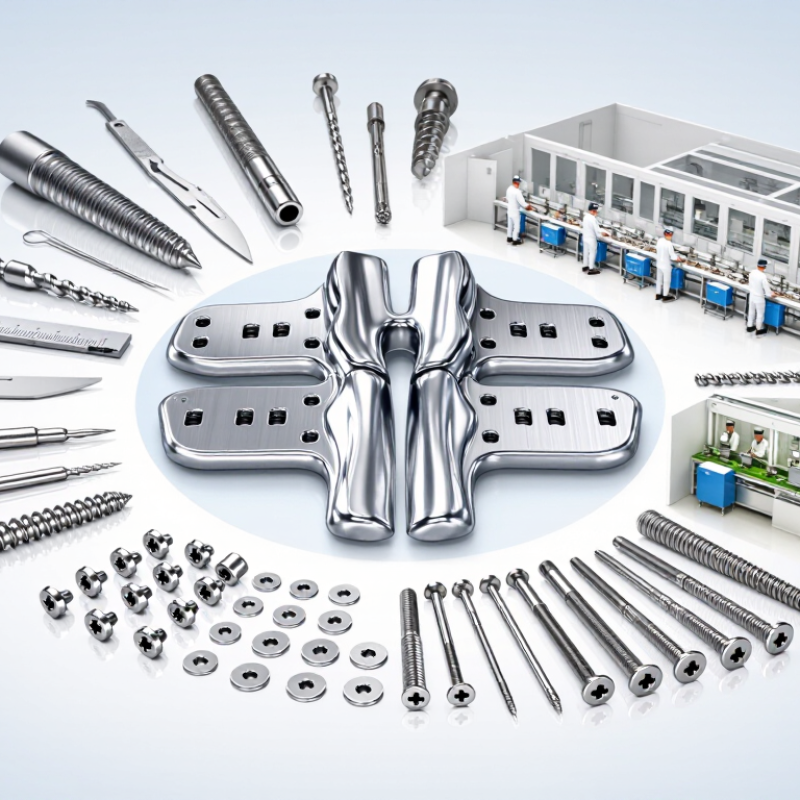
Stainless steel orthopedic implants are medical devices designed to stabilize damaged bones. Common examples include plates, screws, rods, and fixation wires. Their value is practical: they help maintain alignment while natural bone healing progresses. Many devices use implant-grade stainless steel, such as 316L, because it offers strength, corrosion resistance, and reliable machinability. However, material choice alone does not guarantee patient safety. Design, surface finish, sterilization, and manufacturing control also matter.
When evaluating China’s top 10 stainless steel orthopedic implant suppliers, buyers should look beyond catalogs and low prices. Experienced suppliers should provide material certificates, dimensional inspection records, fatigue-test results, and traceability from raw material to shipment. Quality systems should align with recognized medical-device requirements, while product files should support appropriate regulatory review. A surgeon may focus on handling and fit. An engineer may examine thread accuracy and load performance. Both perspectives are necessary. A polished product photo proves very little.
Tips: Ask for recent test reports, audit evidence, and sample inspection records. Confirm whether the supplier controls cleaning, packaging, and sterilization processes. Check complaint-handling procedures, not only production capacity. Fit matters. No supplier is perfect, and even strong documentation can contain gaps. Independent technical review remains wise, especially when implants will serve different bone conditions, surgical techniques, or patient populations.
China Top 10 Stainless Steel Orthopedic Implant Suppliers - What Stainless Steel Orthopedic Implants Are and Why They Matter
| Rank | Supplier profile | Typical product scope | Common stainless-steel grade | Relevant material standard | Primary manufacturing methods | Surface treatment | Quality and regulatory capability | Why the capability matters |
|---|---|---|---|---|---|---|---|---|
| 1 | Profile A — Integrated trauma manufacturer China-based production capability |
Bone plates, cortical and cancellous screws, cerclage wires, and small-joint fixation devices | 316L or 316LVM stainless steel | ISO 5832-1; ASTM F138 | Cold working, CNC machining, precision forming, laser cutting | Electropolishing and passivation | ISO 13485-based quality system; biocompatibility evaluation according to ISO 10993 | Broad trauma coverage requires consistent dimensions, fatigue performance, and corrosion resistance. |
| 2 | Profile B — Precision screw specialist China-based machining capability |
Locking screws, compression screws, cannulated screws, and small-diameter orthopedic fasteners | 316LVM stainless steel | ASTM F138; ISO 5832-1 | Multi-axis CNC turning, thread rolling or cutting, cannulation drilling | Passivation, ultrasonic cleaning, and controlled polishing | Dimensional inspection, torque testing, thread-gauge control, and lot traceability | Accurate threads and drive interfaces reduce insertion damage and improve fixation reliability. |
| 3 | Profile C — Plate and fixation-system supplier China-based forming and machining capability |
Anatomical plates, reconstruction plates, clavicle plates, and compatible screw systems | Wrought 316L stainless steel | ISO 5832-1; ASTM F138 | Laser cutting, CNC milling, press forming, and hole finishing | Mechanical polishing, electropolishing, and passivation | Design verification, fatigue testing, risk management under ISO 14971 | Controlled plate contour and hole geometry support anatomical fit and stable load transfer. |
| 4 | Profile D — Intramedullary fixation supplier China-based precision tube and rod capability |
Intramedullary nails, locking bolts, end caps, and targeting accessories | 316LVM stainless steel | ASTM F138; ISO 5832-1 | Cold drawing, CNC machining, drilling, reaming, and straightening | Fine polishing and passivation | Fatigue testing, straightness inspection, dimensional verification, and traceability | High fatigue strength and accurate locking-hole alignment are essential for long-bone stabilization. |
| 5 | Profile E — Spinal instrumentation supplier China-based implant and instrument capability |
Spinal rods, hooks, cross-links, fixation screws, and supporting instruments | 316L or 316LVM stainless steel | ISO 5832-1; ASTM F138 | CNC turning and milling, precision bending, thread machining | Passivation and low-roughness polishing | System-level compatibility testing, torque testing, and sterilization validation where applicable | Compatible interfaces and controlled surface finish help reduce assembly errors and tissue irritation. |
| 6 | Profile F — Wire and pin manufacturer China-based precision wire capability |
K-wires, Steinmann pins, cerclage wires, and temporary fixation pins | 316L stainless steel | ISO 5832-1; ASTM F138 | Wire drawing, centerless grinding, point forming, and cutting | Polishing and passivation | Diameter control, tip geometry inspection, tensile testing, and packaging validation | Reliable diameter and tip sharpness support accurate placement and predictable handling. |
| 7 | Profile G — External fixation component supplier China-based modular component capability |
Fixation pins, clamps, rods, connectors, and modular external frames | 316L stainless steel | ISO 5832-1; ASTM F138 | CNC machining, tube cutting, threading, bending, and assembly | Passivation, polishing, and cleaning for reusable components | Mechanical strength testing, corrosion-control procedures, and reusable-device reprocessing guidance | Modular strength and corrosion resistance are important for repeated adjustment and clinical handling. |
| 8 | Profile H — Custom orthopedic machining supplier China-based low-volume production capability |
Patient-specific fixation components, prototypes, revision parts, and custom surgical tools | 316LVM stainless steel, subject to approved design specifications | ASTM F138; ISO 5832-1, where applicable | Five-axis CNC machining, additive manufacturing support, and inspection-driven finishing | Electropolishing, passivation, and controlled cleaning | Design-history documentation, process validation, inspection records, and material certificates | Flexible production supports complex geometries while maintaining traceability and dimensional control. |
| 9 | Profile I — OEM and contract-manufacturing supplier China-based outsourced production capability |
Private-label plates, screws, nails, wires, and instrument sets manufactured to customer drawings | 316L or 316LVM, selected according to the validated device design | ISO 5832-1; ASTM F138 | CNC machining, laser cutting, forming, grinding, and assembly | Passivation, electropolishing, and validated cleaning | Supplier qualification, incoming inspection, process controls, and batch traceability | Contract manufacturing can shorten development cycles when documentation and change control are robust. |
| 10 | Profile J — Sterile-packaging and finished-device supplier China-based final-processing capability |
Finished sterile or non-sterile trauma implants, packaging systems, and surgical kits | 316L or 316LVM stainless steel | ISO 5832-1; ASTM F138 | Final machining, cleaning, inspection, kitting, and packaging | Passivation followed by validated cleaning and controlled packaging | ISO 13485 processes; packaging validation under ISO 11607; sterilization validation when sterilization is provided | Packaging integrity and validated sterilization processes help preserve implant safety until use. |
Conclusion
This article provides a practical overview of China’s stainless steel orthopedic implants industry, explaining what these implants are, how they support fracture fixation and orthopedic procedures, and why material strength, biocompatibility, precision manufacturing, and clinical reliability matter. It also examines how China’s supplier market is organized, including manufacturers, specialized component producers, contract suppliers, and export-oriented companies. Readers will learn how to evaluate suppliers based on product range, production capacity, quality control, technical expertise, customization capabilities, and supply consistency.
The article also presents a neutral review of China’s top 10 stainless steel orthopedic implant suppliers without focusing on brand promotion. It highlights the importance of quality standards, regulatory documentation, certification systems, traceability, testing procedures, and international export capabilities. For hospitals and distributors, the final section outlines key purchasing considerations, including product compatibility, sterilization and packaging requirements, delivery performance, after-sales support, communication efficiency, and long-term cooperation potential.
Related Posts
-

How to Choose the Right Orthopedic Plates?
-
What Are Surgical Steel Implants Used For?
-
What Are Orthopedic Implants and Instruments?
-
Top Tips for Choosing the Right Orthopedic Plates for Your Needs
-
Digital Tips for Care and Maintenance of Surgical Steel Implants?
-
China Top Bone Solution Innovations and Their Impact on Healthcare?