
10 Best Surgical Steel Implants Manufacturers Worldwide
Choosing reliable surgical steel implants requires more than comparing factory size, prices, or polished websites. Material quality, clinical evidence, traceability, and manufacturing discipline matter equally. This guide examines ten leading manufacturers worldwide, focusing on their capabilities, product consistency, and documented quality systems.
Most surgical steel implants use medical-grade stainless steel, especially 316L or 316LVM. These materials must resist corrosion, fatigue, and repeated sterilization. Small differences in alloy control can affect long-term performance. Surface finish matters too. A rough implant may increase wear, irritation, or bacterial attachment.
Sir John Charnley, a pioneer of modern joint replacement, said, “The most important thing in total hip replacement is the design of the prosthesis.” His observation remains relevant. Design, material selection, and surgical technique must work together. A respected manufacturer should support that relationship with validated testing, clear technical files, and dependable post-market monitoring.
This ranking is not absolute. No list can fully capture every regional approval, hospital preference, or clinical outcome. Some manufacturers excel in trauma products, while others specialize in spinal or orthopedic systems. Buyers should review ISO 13485 certification, ASTM material compliance, fatigue data, sterilization controls, and published clinical evidence before making decisions.
The strongest suppliers provide more than implants. They provide consistency. They also acknowledge limitations, investigate failures, and improve designs when evidence demands it. That is where trust begins.
What Surgical Steel Implants Are and Why Material Quality Matters
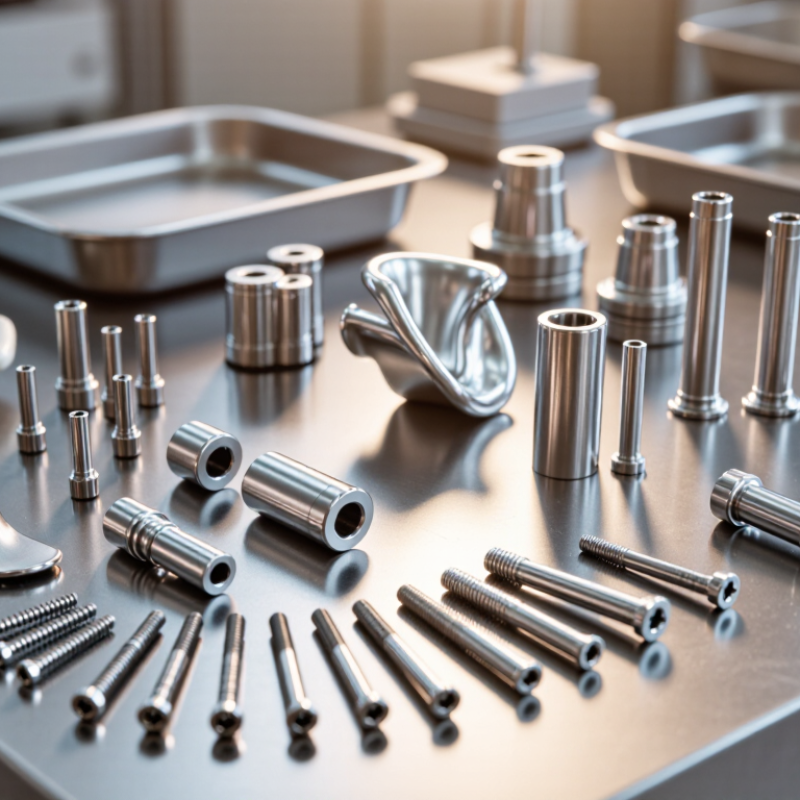
Surgical steel implants are medical devices made from carefully controlled stainless-steel alloys. They may include bone plates, screws, pins, and other internal supports. The term “surgical steel” can sound more precise than it is. In reality, alloy composition, processing, and intended use can differ significantly.
Material quality matters because an implant remains inside a demanding biological environment. Body fluids can encourage corrosion, while repeated movement creates fatigue stress. High-quality implant steel should offer strong corrosion resistance, suitable mechanical strength, and good tissue compatibility. A smooth, well-finished surface can also reduce debris and support safer tissue contact. Small defects matter.
Reliable manufacturers verify chemical composition, heat treatment, surface condition, and dimensional accuracy. They should maintain traceable production records and perform inspections at several stages. Clean manufacturing and validated sterilization processes are equally important. However, laboratory data alone cannot answer every clinical question. Surgeons must match implant design and material properties with bone quality, load, anatomy, and the patient’s medical history.
A careful buyer should examine test methods, certification records, and post-market quality information. Independent review is useful when claims appear unusually broad. Even excellent steel is not automatically suitable for every patient. Material selection deserves humility, because biological responses and healing outcomes can vary.
10 Best Surgical Steel Implants Manufacturers Worldwide - What Surgical Steel Implants Are and Why Material Quality Matters
This table provides a manufacturer-selection and material-quality benchmark rather than a ranked list of named companies. Surgical implant suitability must be confirmed through applicable regulations, product-specific standards, validated testing, and clinical risk assessment.
| No. | Quality Dimension | Verified Benchmark for Surgical Steel Implants | Why Material Quality Matters | Evidence to Request from a Manufacturer |
|---|---|---|---|---|
| 1 | Implant Material Identification | The material should be clearly identified as implant-grade stainless steel, commonly 316LVM or an equivalent grade covered by recognized standards such as ASTM F138 or ISO 5832-1. | Correct grade identification helps ensure the intended corrosion resistance, mechanical performance, biocompatibility, and traceability. | Material certificate, heat number, grade designation, standard edition, and full chemical-analysis report. |
| 2 | Controlled Chemical Composition | Typical 316L implant steel controls carbon at a low level, with chromium, nickel, and molybdenum added to support corrosion resistance. ASTM F138 commonly specifies approximately 17–19% chromium, 13–15% nickel, and 2.25–3.00% molybdenum, subject to the applicable standard and product form. | Excess carbon or an incorrect alloy balance can increase susceptibility to intergranular corrosion and may reduce long-term performance. | Heat-by-heat optical emission spectroscopy or equivalent laboratory results, plus independent verification when required. |
| 3 | Vacuum Melting and Cleanliness | Vacuum-induction melting, vacuum-arc remelting, or another qualified process may be used to reduce unwanted gases, inclusions, and chemical segregation in high-quality implant stock. | Lower inclusion content supports fatigue strength, surface integrity, and predictable behavior under repeated physiological loading. | Melting-route declaration, inclusion-rating results, ultrasonic inspection records, and process qualification documentation. |
| 4 | Mechanical Strength and Ductility | Mechanical properties must meet the requirements of the relevant material or product standard. Typical verification includes yield strength, tensile strength, elongation, and reduction of area; exact values depend on grade, size, and processing condition. | Adequate strength helps resist deformation, while sufficient ductility reduces the risk of brittle fracture during implantation or service. | Certified tensile-test reports, batch sampling plans, test temperature, specimen orientation, and applicable acceptance criteria. |
| 5 | Corrosion Resistance | Finished implants should demonstrate resistance appropriate to their intended use in chloride-containing physiological environments. Material selection, passivation, surface condition, and design all influence corrosion performance. | Corrosion can release metal ions, create surface damage, weaken components, and contribute to adverse biological reactions. | Corrosion-test method and results, passivation records, surface-treatment parameters, and nonconformance history. |
| 6 | Surface Finish and Cleanliness | Surfaces should be free from embedded iron, scale, burrs, machining residues, oils, visible particles, and harmful discoloration. Roughness requirements should be defined according to the implant design and intended tissue contact. | Clean, controlled surfaces can reduce corrosion initiation, particle release, tissue irritation, and contamination risk. | Surface-roughness measurements, visual inspection criteria, cleaning validation, passivation validation, and particle-control records. |
| 7 | Fatigue and Structural Validation | Load-bearing devices should undergo product-specific fatigue, static, torsion, bending, or pull-out testing as applicable. Test conditions should represent the intended anatomical location and worst-case design. | Implants may experience millions of loading cycles; a component that passes a single overload test may still fail under repeated use. | Design-validation protocols, worst-case rationale, fatigue-life data, fixture drawings, failure analysis, and final test reports. |
| 8 | Biocompatibility and Biological Safety | The completed device, including coatings, residues, lubricants, and packaging-related contaminants, should be evaluated under a risk-based biological-safety program aligned with applicable requirements such as the ISO 10993 series. | Biological safety depends on the finished device rather than the metal grade alone. Manufacturing residues and surface treatments can materially change risk. | Biological-evaluation plan, material characterization, cytotoxicity assessment where applicable, toxicological rationale, and test reports. |
| 9 | Manufacturing Quality System | A reliable implant manufacturer should operate a documented medical-device quality system, commonly including ISO 13485 certification and controls for design, production, inspection, corrective actions, and supplier management. | A certified and effectively implemented quality system improves consistency, traceability, change control, and control of nonconforming product. | Current certificate scope, audit history, process maps, corrective-action records, change-control procedure, and supplier-qualification evidence. |
| 10 | Traceability, Sterilization, and Packaging | Each finished implant should be traceable from raw-material heat through processing, inspection, packaging, and release. Sterile products require a validated sterilization process and packaging system appropriate to the claimed shelf life. | Traceability enables effective recalls and investigations, while validated packaging and sterilization help preserve sterility and product integrity until use. | Lot and serial-number system, device history records, sterilization validation, packaging validation, shelf-life data, and release authorization records. |
Related Posts
-
What Are Surgical Steel Implants Used For?
-
What Are Orthopedic Implants and Instruments?
-

How to Choose the Right Orthopedic Plates?
-

Digital Tips for Care and Maintenance of Surgical Steel Implants?
-

Top 10 Implant Stainless Steel Trends at 2026 Canton Fair?
-

2026 Best Orthopedic Prosthesis Options for Global Buyers?