
What Are the 2026 Top Types of Ortho Instruments for Buyers?
Choosing the right ortho instruments in 2026 requires more than comparing catalog prices. Buyers must examine clinical purpose, material quality, sterilization compatibility, and supplier reliability. A polished finish alone proves little. The best evaluation connects each instrument with a real operating-room task.
Common categories include bone-cutting saws, osteotomes, rongeurs, reduction forceps, retractors, drill systems, and surgical screwdrivers. Each type supports a different stage of orthopedic care. A rongeur should remove bone smoothly without excessive hand pressure. A retractor should maintain exposure without damaging surrounding tissue. Drill systems need stable power, accurate attachments, and dependable cleaning instructions. Small details matter.
They often decide outcomes.
For 2026 purchasing plans, buyers should request material specifications, sterilization guidance, warranty terms, and traceability records. Independent clinical feedback can reveal weaknesses that brochures hide. Surgeons may notice grip fatigue after repeated procedures. Sterile-processing teams may identify hinges that trap debris. These observations deserve serious attention.
There is no universal “best” instrument set. A hospital performing joint replacement may prioritize alignment tools and powered systems. A trauma center may need stronger fixation instruments and versatile reduction devices. Budget limits also shape reasonable choices, but low initial cost can become expensive after repairs and replacement. Suppliers should demonstrate consistency, not just make confident claims. Buyers should also test representative samples when possible. This step takes time. It may prevent costly errors.
This guide reviews the leading ortho instruments for 2026 and explains how buyers can compare performance, safety, usability, and long-term value. Some recommendations may remain imperfect because clinical needs vary. Careful review is still better than relying on rankings alone.
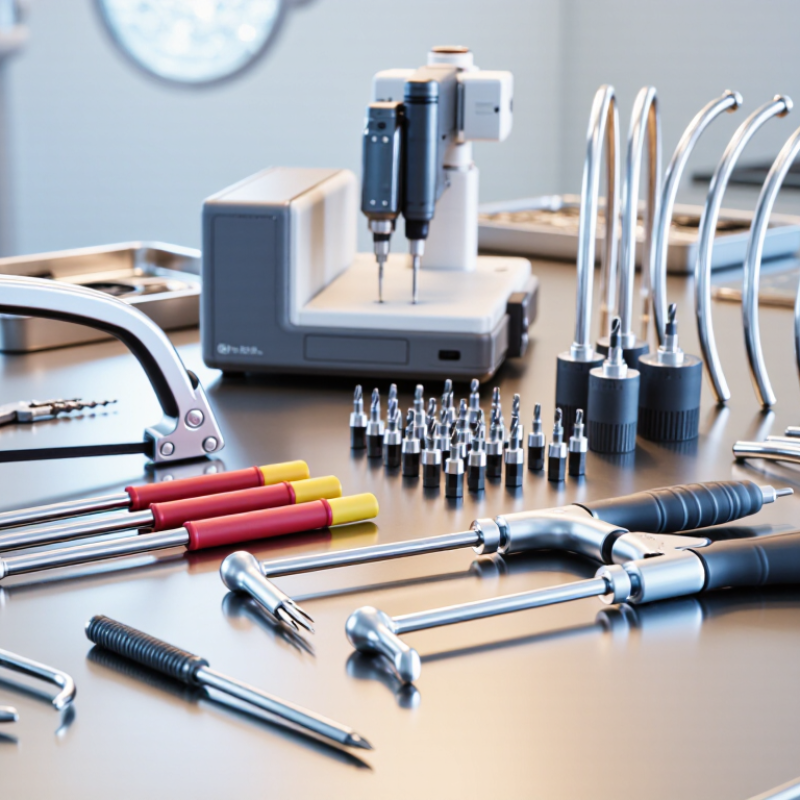
What Are Orthodontic Instruments and Why Do Buyers Need Them?
Orthodontic instruments are precision tools used to examine, place, adjust, and remove dental appliances. Common types include mouth mirrors, probes, explorers, band pushers, ligature cutters, distal end cutters, pliers, scalers, and bracket positioning tools. Each instrument supports a specific clinical movement, such as bending archwires or securing elastic ligatures.
Buyers need these instruments because treatment accuracy depends on controlled, repeatable handling. A poorly balanced plier can make a small adjustment feel awkward. That strain may affect hand stability during a long appointment. Sharp cutters also help reduce wire fragments and improve patient comfort. In practical purchasing, I would inspect grip texture, joint movement, tip alignment, and resistance to repeated sterilization.
Material quality matters.
Stainless steel is common because it offers strength and corrosion resistance when maintained correctly. However, no instrument remains reliable without proper cleaning, inspection, and sterilization procedures. Buyers should check compatibility with their workflow, including autoclave requirements and storage conditions. They should also consider replacement parts, calibration needs, warranty terms, and staff training. A low purchase price can become expensive if tips deform quickly or hinges loosen. This is where judgment matters. A checklist helps, but it cannot replace handling the instrument personally before ordering.
What Are the 2026 Top Types of Ortho Instruments for Buyers?
What Are Orthodontic Instruments and Why Do Buyers Need Them?
| Instrument Type | Primary Function | Typical Orthodontic Use | Common Material | Key Buyer Criteria | Cleaning and Sterilization Considerations | Typical Purchase Priority in 2026 |
|---|---|---|---|---|---|---|
| Orthodontic Pliers | Grasping, bending, cutting, forming, and placing orthodontic components. | Wire adjustment, archwire forming, ligature handling, bracket positioning, and appliance fabrication. | Medical-grade stainless steel; some handles may include silicone or polymer grips. | Jaw alignment, grip comfort, spring action, corrosion resistance, working precision, and replacement-part availability. | Should tolerate validated cleaning and steam-sterilization cycles; hinged areas require thorough cleaning and lubrication where permitted. | Very High |
| Distal-End Cutters | Cuts the distal end of an orthodontic archwire and may retain the cut segment. | Trimming excess wire after placement and reducing soft-tissue irritation. | Hardened stainless steel with precision-ground cutting edges. | Cutting capacity, retained-wire feature, jaw durability, ergonomic handles, and compatibility with commonly used wire sizes. | Avoid cutting materials outside the stated capacity; inspect edges after repeated sterilization and use. | Very High |
| Ligature Cutters | Cuts elastic or metal ligatures and other small orthodontic materials. | Removing ligatures, trimming ligature wire, and supporting bracket changes. | Stainless steel with fine, hardened cutting edges. | Fine tip access, cutting consistency, handle control, corrosion resistance, and clear operating instructions. | Use instrument-specific cleaning procedures and protect the delicate cutting edges during transport and sterilization. | High |
| Weingart Utility Pliers | Grips and guides archwires during placement, removal, and adjustment. | Archwire insertion, wire retrieval, molar-tube access, and general wire manipulation. | Medical-grade stainless steel. | Tip shape, serration design, reach, handle balance, jaw alignment, and resistance to repeated processing. | Clean serrated jaws carefully to remove debris; follow the instrument manufacturer’s validated sterilization instructions. | High |
| Bracket-Removing Pliers | Applies controlled leverage to remove bonded brackets and attachments. | Debonding during treatment completion or bracket replacement. | Stainless steel, sometimes with replaceable or protective working pads. | Controlled force, tip geometry, patient comfort, enamel-protection design, and availability of replacement pads. | Inspect working surfaces for wear; do not use damaged tips that could increase the risk of bracket or enamel damage. | High |
| Bracket Positioning Gauges | Helps standardize bracket height, angulation, and placement reference points. | Direct bonding and placement verification for fixed appliances. | Stainless steel or autoclavable engineering polymer. | Measurement readability, dimensional consistency, access in the oral cavity, and resistance to distortion. | Select models explicitly labeled for repeated clinical reprocessing; avoid abrasive cleaning that can remove markings. | High |
| Band-Setting and Band-Removing Instruments | Seats, adapts, or removes orthodontic bands. | Molar-band placement, adaptation, cement cleanup, and band removal. | Stainless steel with shaped tips designed for specific band procedures. | Tip fit, controlled force, access, patient protection, and compatibility with the clinic’s band system. | Remove cement residue promptly and inspect tips for deformation after each processing cycle. | Medium to High |
| Archwire Forming and Contouring Pliers | Creates bends, loops, offsets, and contours in orthodontic wires. | Finishing adjustments, auxiliary fabrication, and customization of fixed or removable appliances. | Stainless steel with precisely machined or polished working surfaces. | Bend accuracy, jaw smoothness, repeatability, wire-size range, and resistance to marring the wire. | Remove metal particles and residue from contact surfaces; inspect for scratches or burrs. | High |
| Orthodontic Scalers and Explorers | Detects deposits, evaluates margins, and supports access around brackets and bands. | Cement removal, examination of bracket margins, and assessment of hard-to-see areas. | Stainless steel with a fine working tip. | Tip sharpness, tactile feedback, handle comfort, visibility, and safe access around appliances. | Use a validated sharpening and maintenance program where applicable; inspect for tip damage before use. | High |
| Mouth Mirrors and Intraoral Accessories | Provides indirect vision, cheek or lip retraction, and access to working areas. | Routine examination, bonding, wire adjustment, photography, and patient communication. | Stainless steel handles with autoclavable glass or polymer components. | Optical clarity, fog resistance, scratch resistance, handle balance, and patient comfort. | Follow instructions for protecting reflective surfaces; check for chips, cracks, and loss of optical quality. | High |
| Elastic and Ligature Placement Instruments | Places elastic modules, separators, chains, and ligatures around brackets or contact points. | Initial appliance placement, routine adjustments, and replacement of elastomeric components. | Stainless steel or autoclavable polymer. | Tip retention, ease of release, access, rounded edges, and compatibility with different elastic sizes. | Clean narrow tips thoroughly and verify that polymer components remain intact after repeated processing. | Medium to High |
| Debonding and Adhesive-Removal Instruments | Assists with removal of residual adhesive after bracket debonding. | Finishing and polishing procedures following fixed-appliance removal. | Stainless steel, carbide, polymer, or other application-specific working materials. | Controlled material removal, enamel protection, compatibility with handpieces, and replaceable working parts. | Follow the specified cleaning method; inspect rotary or abrasive components for wear and contamination. | Medium to High |
Related Posts
-
What Are Ortho Instruments and How Are They Used?
-
How to Choose the Right Orthopedic Instruments?
-
What Are Orthopedic Implants and Instruments?
-

Top 10 Best Orthopedic Implants and Instruments for Effective Surgery?
-

What is Ortho Surgical and Why is it Essential?
-
What Are Orthopedic Implants and Instruments?