2026 Best Bone Screw Types for Global Buyers
Choosing the right bone screw in 2026 involves more than comparing diameter, length, and price. Global buyers must examine clinical purpose, material performance, manufacturing quality, and regulatory documentation. A cortical screw may suit dense bone, while a cancellous design supports softer bone structures. Locking, cannulated, and self-tapping options offer different benefits during fixation. The best choice depends on anatomy, surgical technique, and approved use.
Real procurement decisions often happen around practical details. Buyers should inspect thread geometry, head design, torque guidance, surface finish, and radiographic visibility. Packaging should protect sterile barriers during long-distance transport. Each lot should include traceability records, inspection results, sterilization information, and clear instructions for use. Suppliers with validated quality systems and responsive technical support deserve closer attention.
No single product fits every market.
Standards and registration requirements vary between countries. Buyers should confirm applicable regulations with qualified local professionals before placing an order. Price alone can hide risks, including inconsistent tolerances, incomplete documentation, or poor after-sales support. Even experienced teams can overlook compatibility with instruments or plates. This guide compares major bone screw types through a practical global sourcing lens, while recognizing that product tables may simplify complex surgical decisions. Careful evaluation remains essential.
Bone Screw Basics and Their Role in Modern Orthopedic Surgery
2026 Best Bone Screw Types for Global Buyers
Bone screws anchor plates, grafts, or fragments during orthopedic repair. Their threads create purchase inside bone and help maintain controlled stability. Cortical screws suit dense bone and use finer threads. Cancellous screws have deeper threads for softer metaphyseal bone. Locking screws connect with a plate’s threaded hole. This can support angular stability in weaker bone. Nonlocking screws compress a plate against the bone surface. A screw is not just a fastener.
Cannulated screws contain a central channel for guidewire placement. They can improve alignment during minimally invasive procedures. Headless compression screws may reduce surface irritation near joints. The ideal type depends on anatomy, fracture pattern, bone quality, and surgical approach. Surgeons also consider diameter, length, thread design, and insertion torque. Small details matter, especially near cartilage, nerves, or growth plates. Too much torque can damage fragile bone.
For global buyers, product evaluation should include material traceability, sterile packaging, dimensional accuracy, and documented testing. Common materials include implant-grade titanium alloys and surgical stainless steel. Each has different strength, imaging, and handling characteristics. Regulatory status must match the destination market. Do not rely only on catalog photographs. A screw may appear suitable but fail a specific clinical need. Real-world feedback from surgeons and operating-room staff remains valuable. Selection is rarely perfect. Careful review still reduces avoidable risk.
Main Bone Screw Types and Their Structural Differences
In 2026, global buyers should compare bone screws by structure, not appearance alone. According to Precedence Research’s 2024 report, the orthopedic implants market reached approximately USD 53 billion in 2023. This scale increases the need for precise product evaluation.
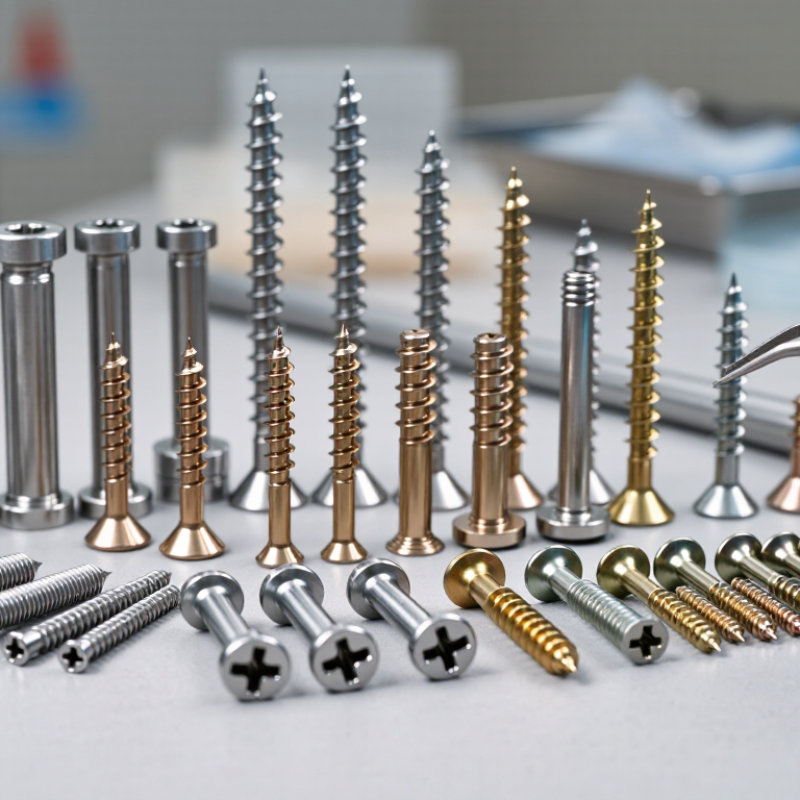
Cortical screws have fine threads and a smaller pitch for dense bone. Cancellous screws use deeper, wider threads for softer metaphyseal bone. Locking screws connect with a plate through threaded heads, creating a fixed-angle construct. Conventional screws rely more heavily on plate-to-bone compression. Cannulated screws contain a central channel, allowing guide-wire placement during minimally invasive procedures. Lag screws produce interfragmentary compression, while headless compression screws sit below the bone surface.
The distinction is practical. Thread geometry changes purchase, insertion torque, and pull-out resistance. ASTM F543 outlines mechanical testing methods for metallic bone screws, including torsion and axial pullout. Buyers should request test conditions, alloy specifications, coating details, and dimensional tolerances. A market review by Grand View Research also places the broader orthopedic devices sector above USD 50 billion, although estimates differ by scope and methodology. That limitation matters. Market size cannot prove clinical suitability. Surgeon preference, bone quality, fracture pattern, and instrument compatibility still influence selection. A screw that performs well in dense cortical bone may disappoint in fragile cancellous bone. Procurement teams should verify regional regulatory documentation and sterilization data before approval.
2026 Best Bone Screw Types for Global Buyers - Main Bone Screw Types and Their Structural Differences
| Screw type |
Key structural features |
Typical bone or fixation context |
Main structural distinction |
| Cortical screw |
Usually has a relatively fine thread with a smaller thread depth and pitch than a cancellous screw. |
Commonly used in dense cortical bone, including many diaphyseal fixation applications. |
Fine thread geometry is designed for purchase in denser bone. |
| Cancellous screw |
Typically has a coarser, deeper thread than a cortical screw; may be fully or partially threaded. |
Often used where fixation engages cancellous or metaphyseal bone, depending on the system and indication. |
Deeper, wider-spaced threads are suited to less dense bone structure. |
| Locking screw |
Has a threaded head that engages a matching threaded plate hole, in addition to the shaft thread that engages bone. |
Used with compatible locking plates to create a fixed-angle plate-and-screw construct. |
The head-to-plate thread connection distinguishes it from a conventional screw that relies on plate compression. |
| Conventional non-locking screw |
Usually has a smooth, non-threaded head; tightening can draw the plate toward the bone when used in a standard plate hole. |
Commonly used for plate fixation where plate-to-bone contact or compression is intended by the construct. |
Does not lock into the plate hole; fixation depends on screw purchase and the plate-bone interface. |
| Lag screw |
A fixation principle rather than one unique head design: threads engage the far fragment while the near fragment is allowed to slide over the shaft, often using a glide hole. |
Used to create interfragmentary compression across suitable fracture planes. |
Compression comes from differential engagement of the near and far fragments, not simply from a particular thread profile. |
| Cannulated screw |
Contains a central bore that allows placement over a guide wire; cannulation can be combined with different thread and head designs. |
Used in procedures where guide-wire placement and image-guided positioning are part of the technique. |
The central channel is its defining feature; it does not, by itself, specify compression or locking behavior. |
| Headless compression screw |
Generally has no prominent external head and uses differing thread sections or pitches to generate compression as it is advanced. |
Used in selected small-bone and articular fixation contexts where a low-profile implant may be desirable. |
Buried, low-profile design and differential thread geometry distinguish it from headed screws. |
| Self-tapping screw |
Has a cutting flute or tip feature that forms mating threads as the screw is inserted into a prepared hole. |
Available in different screw families; use depends on bone, implant design, and the specified surgical technique. |
“Self-tapping” describes thread-forming behavior, not a separate bone or fixation category. |
Note: Screw features and indications vary by implant system, material, dimensions, and applicable regulatory labeling. Selection and use should follow the device instructions for use and be determined by qualified healthcare professionals.
How to Match Bone Screws with Surgical Applications
2026 Best Bone Screw Types for Global Buyers
How to Match Bone Screws with Surgical Applications
In 2026, the best bone screw is the one matched to the anatomy and surgical goal. Cortical screws suit dense diaphyseal bone and provide strong thread engagement. Cancellous screws have deeper threads for softer metaphyseal or epiphyseal bone. Locking screws create a fixed-angle connection with a compatible plate. Cannulated screws support guidewire placement during precise fixation. The choice should follow the fracture pattern, bone quality, and reduction plan.
For compression across a fracture, a lag technique may be appropriate when the near cortex permits gliding. A locking construct is not automatically stronger. It can fail when the plate is poorly positioned or the working length is unsuitable. Screw diameter, length, thread profile, head design, and material all affect performance. Imaging findings and intraoperative measurements should guide the final selection. A catalog image alone is not enough.
Global buyers should review fatigue testing, dimensional tolerances, material certificates, sterilization status, traceability, and regulatory documentation. Packaging must protect sterile barriers during long-distance transport. Procurement teams also need clear instructions for compatible instruments and implantation steps. A practical review should admit one uncomfortable fact: measurements can be wrong. Surgeons may need several sizes available, especially when bone density is uncertain. Local registration requirements and hospital protocols must be checked before purchase.
Material, Size, Thread Design, and Fixation Performance
Bone screw selection begins with material, but the patient and procedure shape the decision. Titanium alloys are valued for strength and corrosion resistance, while stainless steel may suit specific systems and clinical preferences. Their imaging behavior and compatibility with other implants also deserve review. Material alone does not predict success. It is only one part.
Size must match the bone and intended fixation. A screw that is too long may threaten nearby structures; one that is too short may provide inadequate purchase. Diameter, length, and available bone stock should be assessed together by qualified clinicians. Small differences matter. Thread design matters too. Coarse threads can engage cancellous bone, while finer threads may be considered for denser cortical bone. Some screws use different thread patterns along the shaft to support compression across a fracture. Yet design names can be confusing, and catalog measurements are not always easy to compare.
Fixation performance depends on the whole construct, including bone quality, placement, and load. A specification sheet cannot show how a screw will behave in every patient. Buyers should check traceable test data, dimensional tolerances, sterilization information, and applicable market documentation. Ask for evidence, not just claims. A tidy comparison table helps, though it can hide important differences in test methods. Clinical selection and use should remain with trained professionals under local requirements.
2026 Best Bone Screw Types for Global Buyers
Material, size, thread design, and fixation performance comparison
| Screw type |
Common material |
Thread design |
Typical diameter range |
Fixation profile |
| Cortical screw |
Titanium alloy or stainless steel |
Fine, closely spaced threads |
2.0–4.5 mm |
Strong purchase in dense cortical bone |
| Cancellous screw |
Titanium alloy or stainless steel |
Coarse, deep threads with larger pitch |
4.0–7.3 mm |
Higher thread engagement in softer cancellous bone |
| Locking screw |
Titanium alloy or stainless steel |
Head thread locks into a compatible plate |
2.7–5.0 mm |
Angular stability and reduced plate-to-bone compression |
| Cannulated screw |
Titanium alloy or stainless steel |
Partial or full thread around a guidewire channel |
3.0–7.3 mm |
Accurate placement for fracture and joint fixation |
| Bioabsorbable screw |
PLLA, PLGA, or related bioabsorbable polymers |
Coarse polymer thread with lower insertion torque |
2.0–7.0 mm |
Temporary fixation where later hardware removal is undesirable |
Diameter ranges represent commonly specified orthopedic screw sizes and vary by anatomy, system design, and indication. Fixation performance depends on bone quality, thread engagement, pilot-hole preparation, insertion torque, plate compatibility, and surgical technique; the chart is a product-selection reference rather than a clinical outcome ranking.
Global Buyer Checklist for Quality, Compliance, and Supply
2026 Best Bone Screw Types for Global Buyers
Global buyers should match bone screw types to anatomy, fixation, and market requirements. Cortical screws suit dense bone. Cancellous screws provide deeper thread purchase in softer bone. Locking screws support angular stability. Cannulated designs can improve guidewire placement, but they require careful cleaning validation.
Quality evidence must go beyond a certificate. Request material certificates, dimensional inspection records, torque data, fatigue results, and sterilization validation. Confirm implant-grade material, surface finish, thread accuracy, and lot traceability.
The WHO Global Patient Safety Report 2024 states that one in ten patients experiences harm in healthcare, with more than half considered preventable. Small manufacturing variations can therefore carry serious consequences. ISO 13485 certification supports quality management, but it does not replace product-specific verification.
Tips:
Build a supplier file with the ISO certificate, audit scope, test methods, regulatory registrations, and recent nonconformity records. Check UDI, labeling, shelf-life, and local language requirements before ordering. Ask for samples from regular production, not special batches. Confirm whether the supplier can maintain alloy, coating, packaging, and dimensions across repeat orders. Supply risk deserves equal attention. Record lead times, minimum order quantities, backup capacity, and change-notification procedures. Grand View Research’s 2024 orthopedic implants analysis indicates continued market growth, but growth can also increase pressure on capacity and inspection. A lower price may hide longer validation work. That is easy to underestimate. Even a strong checklist can miss a weak second-tier supplier, so periodic requalification remains necessary.