Choosing a supplier for ortho surgical instruments in China takes more than comparing prices or browsing a polished catalog. The instruments must feel balanced in the hand, align consistently, and arrive with clear material and quality documentation. Small details matter. A clamp that opens unevenly or a cutter with a rough finish can raise practical questions during evaluation. These details deserve careful review, not assumptions.
Surgeon and author Atul Gawande wrote, “Better is possible.” That principle offers a useful lens for assessing suppliers, even though it was not a comment about Chinese manufacturers specifically. Ask how the supplier controls production, checks instrument dimensions, manages traceability, and responds when a sample falls short. Request samples and examine them under realistic handling conditions. Confirm that product specifications and care instructions are clear, and check whether the supplier can provide consistent communication after an order. A factory visit or independent quality audit may add useful evidence, but neither guarantees a perfect result. No checklist catches everything. This guide compares practical signals of reliability, from product range and manufacturing capability to documentation and service. It also recognizes an uncomfortable truth: a low quote can look attractive before shipping, inspection, and support are considered. The best choice is not automatically the largest supplier; it is the one whose capabilities match the instruments and evidence your organization needs.

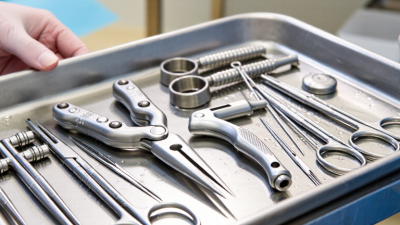
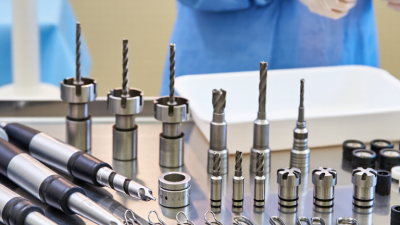
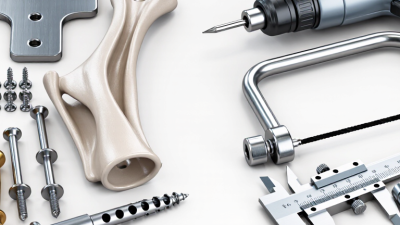
Chinese suppliers manufacture a broad range of orthopedic instruments, from individual tools to procedure-specific sets. Trauma products include bone-holding and reduction forceps, plate benders, drill guides, depth gauges, and screwdrivers. For joint and spine procedures, catalogs may include retractors, rasps, curettes, osteotomes, trial components, and instrument trays. Some suppliers also make saw blades and reamers. A tray’s layout matters: a missing depth gauge can slow a case.
The World Health Organization’s 2022 Musculoskeletal health fact sheet estimates that 1.71 billion people worldwide live with musculoskeletal conditions. This is not a measure of instrument demand, but it shows the scale of clinical need. Buyers should match instruments to the intended procedure, compatible implants, and local sterilization workflow. Fit matters. A tool that looks similar may have different dimensions or handling characteristics.
Supplier checks should go beyond catalog photographs. Request technical drawings, material specifications, dimensional inspection records, and evidence that reusable instruments tolerate the stated cleaning and sterilization process. Inspect joints, cutting edges, surface finish, and tray organization on sample sets. These details can be easy to overlook. I would also compare the supplier’s documentation with the exact products being quoted; a polished document alone does not prove consistent production.
Representative orthopedic instrument families commonly manufactured by suppliers in China.
Values count the representative instrument examples listed for each category; they are not market-share figures or a supplier census. Product availability varies by manufacturer.
Choosing an orthopedic surgical instrument supplier takes more than comparing catalogs and delivery dates. ISO 13485:2016 provides a framework for evaluating how a supplier manages quality across relevant medical-device processes. It does not guarantee that every instrument is suitable for every procedure. The certificate’s scope and the supplier’s actual controls matter.
A careful review looks for clear document control, staff training records, equipment maintenance, and traceability from incoming materials to finished instruments. Ask how nonconforming items are identified and contained. Request examples of corrective actions, such as how a recurring inspection failure led to a process change. These records show whether the quality system works in daily production, not just during an audit.
That distinction matters. A polished certificate can look reassuring, yet it cannot replace a direct review of manufacturing controls, inspection methods, and change management. Check whether outsourced processes are controlled and whether the stated certification scope covers the activities you need. A supplier should explain its evidence plainly, including gaps or limits. No system is flawless; honest answers and consistent records are often more revealing than confident claims.
Best Ortho Surgical Instruments Supplier in China?
How ASTM F899-23 Specifies Stainless Steel for Surgical Instruments
ASTM F899-23 sets requirements for wrought stainless steels used in surgical instruments. It gives buyers a shared basis for checking steel designation, chemical composition, and specified material condition. That matters. A supplier should link the material test report to the heat or production lot, not merely state a grade. For a small clamp or forceps, consistent hardness can affect handling, edge retention, and resistance to wear. Yet compliance alone cannot confirm finished-instrument geometry, workmanship, or cleaning and sterilization validation. Not by itself.
Material selection depends on the instrument’s design and intended use. A cutting tool and a reusable holding instrument may need different balances of hardness, corrosion resistance, and toughness. Buyers can ask for traceable test records and clarify how heat treatment is controlled. Check that the documents match the ordered grade and relevant specification requirements. A certificate is useful, but it does not tell the whole story. It is tempting to treat a compliant grade as a complete quality verdict; that is too simple. Ask how the steel is processed, inspected, and linked to the finished batch. Details matter.
For a buyer comparing orthopaedic surgical instrument suppliers in China, reprocessing information deserves close attention. ISO 17664-1:2021 sets requirements for information manufacturers provide when reusable medical devices need processing before use. It does not replace the facility’s own procedures or prove that every local setup will work.
Useful instructions should cover the instrument’s full journey: point-of-use care, transport, cleaning, inspection, packaging, sterilization, and storage. Details matter. Staff need to know whether a joint should be opened, which brush size fits a lumen, and how to check for retained soil. Short, clear steps help during busy shifts. Vague wording does not.
Ask suppliers for device-specific instructions and supporting validation information, then check that the guidance matches the instruments supplied. Confirm recommended cleaning methods, cycle parameters, and any limits on repeated processing. Paperwork can look tidy while a hinge still traps soil. That deserves a closer look. Instructions should also be readable, available to the people doing the work, and reviewed when products or processes change. A careful review cannot eliminate every risk, but it can reveal missing steps before instruments reach the operating room.
Best Ortho Surgical Instruments Supplier in China?
Market access depends on evidence, not just machining quality. A forceps may look flawless on a production bench, yet still need documented materials, risk controls, validated cleaning instructions, and traceable manufacturing records. China’s NMPA, the EU Medical Device Regulation (EU MDR 2017/745), and the US FDA use different classification and submission pathways. Under the EU MDR, reusable surgical instruments are generally Class Ir and require notified-body involvement for their reprocessing aspects. FDA requirements depend on the device’s intended use and classification; some devices need 510(k) clearance, while others may follow different routes. Registration alone is not clearance. That distinction matters.
The commercial stakes are substantial. MedTech Europe’s 2024 industry report estimated the European medical technology market at €170.9 billion in 2022. That figure is market context, not a forecast for orthopaedic instruments, but it shows why compliant access matters. When assessing a Chinese supplier, buyers should request current certificates, product-specific regulatory records, sterilization or reprocessing evidence, and change-control procedures. Check that the submitted model, labeling, and manufacturing site match the actual shipment. A polished document set can still hide gaps. The uncomfortable question is whether the supplier can keep evidence current after a design change, not merely produce it during an audit.
| Market | Regulatory pathway | Local representation and responsibilities | Evidence and conformity assessment | Labeling and traceability | Supplier due-diligence checks |
|---|---|---|---|---|---|
| China — NMPA | Medical devices are generally classified as Class I, II, or III. Class I devices are subject to filing; Class II and III devices require registration. The applicable route depends on the device’s intended use and classification. | An overseas registration applicant or filing party must appoint a legal-person enterprise in China as its agent for the relevant regulatory responsibilities. | The submission route and supporting documentation depend on device class. Technical documentation and clinical evaluation are assessed under applicable NMPA requirements; clinical-trial requirements depend on the device and available evidence. | Confirm Chinese-language labeling and instructions meet applicable requirements. Check whether the device falls under current UDI implementation requirements. | Verify the exact device classification, registration or filing status, approved product scope, manufacturing-site details, and the agent’s role. Confirm that any claimed registration covers the specific instrument and intended use. |
| European Union — MDR (EU) 2017/745 | Devices are classified under the MDR as Class I, IIa, IIb, or III. The classification and intended purpose determine the applicable conformity-assessment route and whether a Notified Body is required. | A manufacturer established outside the EU must appoint a single EU Authorised Representative. The manufacturer, importer, distributor, and representative have distinct MDR obligations. | Manufacturers must meet applicable general safety and performance requirements and prepare technical documentation and clinical evaluation. Notified Body involvement is generally required for Class IIa, IIb, and III devices. Class I devices have exceptions, including sterile, measuring, and reusable surgical instruments; for reusable surgical instruments, Notified Body assessment is limited to aspects relating to reuse. | Check applicable CE marking, EU Declaration of Conformity, device identification and UDI obligations, and language requirements in each destination country. Reusable instruments also require appropriate validated reprocessing information. | Check the device’s MDR classification, valid certificates where required, certificate scope and validity, EU Authorised Representative details, technical documentation availability, and evidence supporting cleaning, disinfection, and sterilization claims. |
| United States — FDA | The pathway depends on the device’s FDA classification and product code. Depending on the device, market entry may involve a 510(k), De Novo request, PMA, or an applicable exemption. A 510(k) establishes substantial equivalence to a legally marketed predicate device. | Foreign establishments subject to FDA registration requirements must designate a U.S. Agent. Establishment registration and device listing do not, by themselves, mean that FDA has cleared or approved a device. | FDA requirements vary by device and pathway. Check the applicable premarket status and any required quality-system, manufacturing, performance, or biocompatibility evidence. Do not assume that instruments in the same product family share one pathway. | Confirm applicable labeling, establishment registration and device-listing obligations, and UDI requirements. Check whether the specific device or labeling is subject to an FDA UDI exception or alternative. | Verify the FDA product code, classification, applicable premarket pathway, and any relevant clearance, approval, or exemption. Confirm that the listed device and manufacturing establishment match the products being supplied. |
| Cross-market supplier assessment | There is no single approval that automatically grants access to China, the EU, and the United States. Classification and obligations are assessed separately in each market. | Identify the legal manufacturer and verify the roles and contact details of required local representatives, agents, importers, or distributors for each target market. | Request market-specific regulatory evidence and confirm that model numbers, intended use, manufacturing sites, and device configurations align across technical documents and supply records. | Review material specifications, validated reprocessing instructions for reusable instruments, packaging and shelf-life claims where relevant, and product identification and traceability processes. | Assess quality controls, change notification, complaint handling, nonconforming-product controls, supplier oversight, and the ability to provide accurate, current regulatory documentation. |
Regulatory pathways depend on the specific device, classification, intended purpose, and destination market. Verify current requirements and device-specific status with the relevant competent authority or qualified regulatory professional.
WhatsApp us