How to Choose the Right Surgical Set in 2026?

Choosing the right surgical set in 2026 requires more than comparing instrument counts or purchase prices. It demands clinical insight, sterile processing knowledge, and evidence-based planning. A surgical set should match the procedure, surgeon preference, facility capacity, and reprocessing workflow.

The details matter. The Lancet Commission on Global Surgery estimated that more than 313 million operations occur worldwide each year. This volume increases pressure on hospitals to improve readiness, standardization, and instrument availability. Meanwhile, Fortune Business Insights reports continued growth in the global surgical instruments market, driven by minimally invasive procedures, hospital expansion, and technological development. These trends create more options, but also more confusion.

A practical evaluation should examine instrument durability, ergonomics, traceability, packaging, and sterilization compatibility. A set that looks economical may create hidden costs through repeated repairs, missing components, or longer turnover times. AAMI ST79 emphasizes validated sterilization practices and proper handling of reusable medical devices. That guidance should influence purchasing decisions, not merely post-purchase training.

Not every set fits.

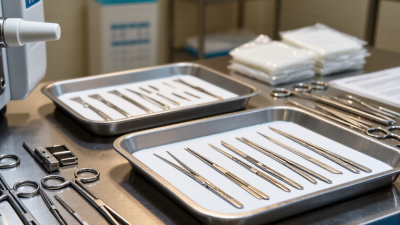
Clinical teams should test representative instruments in realistic operating-room conditions. Can the needle holder close smoothly with gloved hands? Can staff identify every component under time pressure? Can the tray remain within validated weight and configuration limits? These questions reveal weaknesses that product brochures often miss.

Market forecasts are useful, but they are not clinical evidence. Procurement decisions should combine manufacturer documentation, user feedback, service records, and recognized standards. Some assumptions may still prove wrong. That is acceptable when teams measure outcomes, invite sterile processing professionals into the discussion, and revise the surgical set based on real-world performance.

How to Choose the Right Surgical Set in 2026?

Map Procedure Needs: WHO Estimated 234 Million Surgeries Worldwide

How to Choose the Right Surgical Set in 2026?

The WHO estimated 234 million major surgeries worldwide each year. That figure is historical, not a 2026 forecast. Still, it reveals the scale of surgical demand and supply pressure. Every procedure needs instruments that match its clinical steps, patient risks, and working environment.

Start by mapping the procedure, not by counting instruments. A basic abdominal operation may require cutting, grasping, clamping, retracting, and suturing tools. List each step with the expected instrument. Then check whether the set supports different patient sizes and unexpected bleeding. In a rural theatre, durability and simple sterilization may matter more than an extensive instrument range. In a high-volume hospital, clear tray organization can reduce setup delays.

Ask the surgical team what fails in real use. Missing clamps? Blunt scissors? Difficult tracking? These details often expose weak purchasing decisions. Review sterilization capacity, storage space, maintenance support, and replacement time before approval. A set that looks complete on paper may still create delays beside the operating table.

The 234-million estimate also deserves caution. Surgical activity differs by region, and older global figures cannot describe every current need. Local procedure data should guide final selection. No checklist is flawless. A short trial, documented feedback, and periodic review can reveal problems that specifications miss.

Match Instrument Risks: CDC Identifies SSI as a Major Surgical Threat

How to Choose the Right Surgical Set in 2026?

Surgical site infections remain a serious threat to patient safety. The CDC identifies SSIs as among the most common and costly healthcare-associated infections. Instrument selection must therefore support more than surgical speed. It must reduce contamination risks at every stage.

Match the set to the procedure, tissue type, and expected contamination level. A basic set may suit a clean, short operation. Complex procedures may require specialized retractors, delicate graspers, longer instruments, or devices with narrow channels. Check whether each item can be cleaned, inspected, sterilized, and dried properly. Hard-to-reach joints deserve close attention. They often hide residue.

The packaging process matters too. Overloaded trays can block sterilant contact and create handling problems. Follow validated weight limits, manufacturer instructions, and facility protocols. CDC guidance supports strict hand hygiene, sterile technique, environmental control, and reliable sterilization practices. Still, no surgical set guarantees safety. That assumption is dangerous.

Review usage records and staff feedback regularly. A missing clamp can delay surgery. An unnecessary instrument can increase tray weight and reprocessing time. Both issues deserve correction. Ask whether the set reflects current procedures, not old habits. Local testing may reveal weaknesses that a written checklist misses. Some teams discover this only after a near miss. That is uncomfortable, but useful. Safety improves when instrument choice, cleaning evidence, and operating-room experience are examined together.

Verify Sterilization Capacity Against AAMI ST79 and ISO 17665

How to Choose the Right Surgical Set in 2026?

Choosing the right surgical set starts with sterilization capacity, not instrument count. A large tray can block steam penetration, overload shelves, and extend cooling time. AAMI ST79 expects documented, validated practices for cleaning, packaging, loading, monitoring, and record review. ISO 17665:2024 provides a process-based framework for validating and controlling moist-heat sterilization. Treat both standards as operational requirements, not paperwork.

Scale matters. The CDC reported that about one in 31 U.S. hospital patients has a healthcare-associated infection on any given day. WHO’s 2022 global report found healthcare-associated infection prevalence of 7% in high-income acute-care hospitals and 15% in low- and middle-income hospitals. These figures are not tray-specific. They still show why dependable reprocessing capacity matters.

Check chamber volume, validated load limits, cycle parameters, drying performance, and biological-indicator procedures. A set may fit physically yet fail operationally.

Tips: Map each set’s weight, density, lumens, and packaging before purchase. Test worst-case loads during qualification. Record indicators, temperature, exposure time, and lot release. Watch wet packs and crushed wraps. They are warnings, not cosmetic defects. Review failed cycles with the infection-prevention team. I would also challenge the spreadsheet. Real staff handling is usually messier than the validation model.

Compare Total Costs Using FDA Reprocessing and Tray-Use Requirements

How to Choose the Right Surgical Set in 2026?

A surgical set should be priced beyond its purchase invoice. FDA guidance requires reusable devices to have validated reprocessing instructions, and facilities must follow the manufacturer’s current instructions for use (FDA, 2015). FDA does not prescribe one universal tray size. Your hospital must control configuration, inspection, sterilization, storage, and traceability.

Count every cycle. Include decontamination labor, water, electricity, detergent, packaging, biological indicators, repairs, and replacement instruments. AAMI ST79:2017, with later amendments, emphasizes documented sterilization controls and competent staff. AORN’s 2024 guidance also supports standardized tray assembly and point-of-use treatment. The first spreadsheet is rarely perfect.

Published operating-room utilization studies commonly report 20–40% of tray instruments unused. Verify that range locally. A 50-instrument tray with 15 unused pieces still consumes the full processing cycle. It also occupies storage space and increases handling exposure. Compare that cost with a smaller set, but check whether missing instruments could cause delays. One delayed case may outweigh months of processing savings.

Use CDC NHSN surgical-site infection data to monitor procedure-specific risk, not vague averages. WHO’s global guidelines report infection rates reaching about 11% in some low- and middle-income surgical settings.

Cost cutting cannot weaken inspection or sterilization controls. Ask for cycle records, repair history, and validated reprocessing evidence before approval. Convenience is not evidence.

Confirm 2026 Compliance with FDA UDI, ISO 13485, and EU MDR

How to Choose the Right Surgical Set in 2026?

Choosing a surgical set in 2026 requires more than checking instruments and packaging. Confirm that every device has the correct FDA Unique Device Identifier when entering the United States market. Review the identifier, label, production information, and database records. A missing or inconsistent UDI can delay receiving, recall handling, and operating-room traceability. Small details matter.

ISO 13485 evidence should support the manufacturer’s quality system, not replace practical verification. Request current certification, scope details, sterilization controls, inspection records, and change-management procedures. Check whether the certification covers the actual surgical set and its intended use. Certification alone is not proof of complete product compliance. That distinction is often overlooked.

For European markets, review EU MDR classification, technical documentation, clinical evaluation, risk management, labeling, and post-market surveillance duties. Confirm the applicable conformity assessment route and the presence of a valid CE marking. Check UDI requirements, economic-operator information, and relevant EUDAMED obligations. Requirements can depend on device class and market timing. Do not rely on a generic compliance statement. In practice, I also compare the delivered set against its approved configuration, including instrument count, tray layout, and sterile-barrier condition. A checklist can still miss a weak link. Ask for objective records, inspect the physical set, and document every unresolved question before purchase.

How to Choose the Right Surgical Set in 2026?

Key FDA UDI, ISO 13485, and EU MDR milestones to verify before purchasing a surgical set.

When evaluating a surgical set in 2026, confirm that the device label and packaging support applicable FDA UDI requirements, that the manufacturer operates an ISO 13485:2016 quality management system, and that EU MDR documentation, conformity assessment, post-market surveillance, and classification requirements are addressed where applicable. EU MDR transition dates vary by device class and eligibility conditions; they should not be treated as a universal approval deadline.

Reference milestones: FDA UDI Final Rule effective in 2013; ISO 13485:2016 published in 2016; EU MDR applied from 26 May 2021; extended EU MDR transition deadlines include 31 December 2027 for certain Class III and implantable devices and 31 December 2028 for certain Class IIa, Class IIb, and lower-risk devices subject to applicable conditions.