What Are the Top Bone Prosthesis Types in 2026?

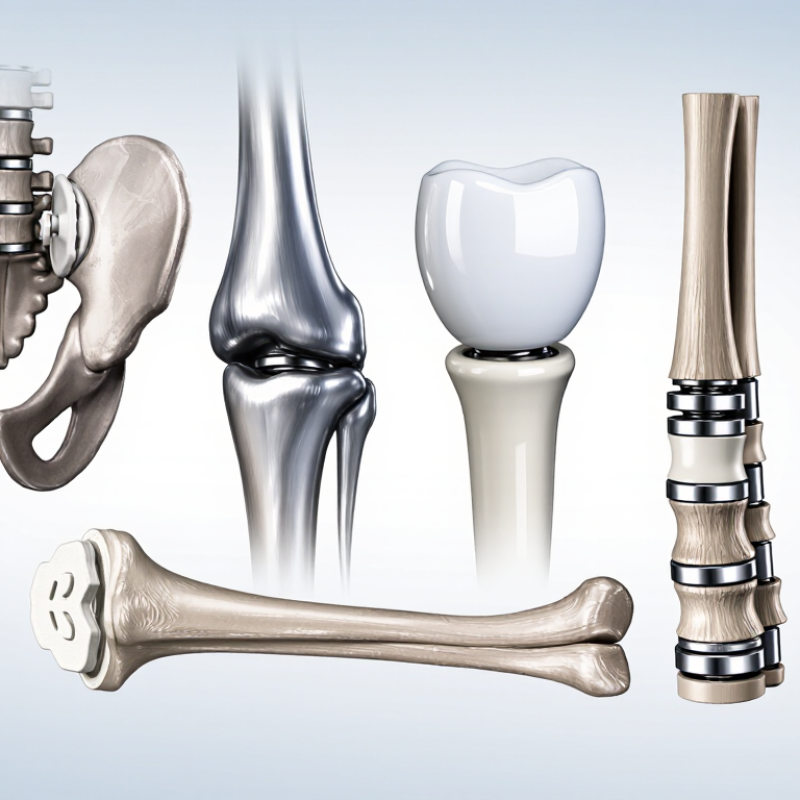
In 2026, a bone prosthesis can replace a damaged joint surface, a section of bone, or both. The right design depends on the site and the amount of healthy bone that remains. A hip or knee replacement is familiar, but it is not the only option. Surgeons may also use partial joint implants, modular segmental prostheses, or patient-specific implants for complex defects.

Materials and fixation matter. Titanium alloys are common when strength and bone integration are priorities. Cobalt-chromium alloys and ceramic components may be used in certain joint designs, while durable polymer liners can reduce friction. Some implants are cemented in place; others rely on a textured surface that encourages bone growth. Custom implants, including some made with 3D printing, can match unusual anatomy more closely. Still, a precise fit does not guarantee an easy recovery.

The comparison ahead looks at these major types, their typical uses, and the trade-offs patients may discuss with an orthopedic specialist. Age, activity, bone quality, infection risk, and previous surgery can all affect the choice. Even two people with similar scans may need different solutions. That detail is easy to overlook. Implant names alone cannot predict durability or function, and newer does not automatically mean better. Evidence and long-term results vary by device and patient group. This overview is educational, not a substitute for an individual assessment. A qualified clinician can explain which options are appropriate and what outcomes to expect.
What Are the Top Bone Prosthesis Types in 2026?

What Bone Prostheses Are and How They Are Classified

What Are the Top Bone Prosthesis Types in 2026?

What Bone Prostheses Are and How They Are Classified

Bone prostheses are medical implants that replace or support damaged or missing bone. They may restore a section of a limb, rebuild part of the skull, or form part of a joint replacement. Some are designed to carry body weight; others protect delicate structures or help restore movement. They are not the same as bone grafts, which use biological tissue. A small distinction, but an important one.

Clinicians and researchers classify these implants in several overlapping ways. By location, they may be described as hip, knee, spinal, cranial, or limb-reconstruction prostheses. By purpose, they can replace a joint surface, bridge a missing bone segment, or reinforce weakened bone. Materials include metals, ceramics, polymers, and combinations chosen for strength, wear, and tissue compatibility. Fixation may rely on bone cement, press-fit contact, or biological integration as bone grows around the implant. These categories help explain design, but real cases rarely fit one box neatly. A long-bone implant, for example, may also include a joint component. Selection depends on anatomy, activity, bone quality, and clinical assessment; no single material or design suits everyone.

Major Types Used in Hip and Knee Reconstruction

Hip reconstruction commonly uses a femoral stem, a ball-shaped head, and an acetabular cup with a liner. The stem sits inside the thigh bone, while the cup replaces the damaged socket. Heads may be ceramic or metal, and liners are often made from durable polyethylene. Fit matters. Some implants are fixed with bone cement; others use textured surfaces that encourage bone growth. Hybrid fixation combines both approaches.

Knee reconstruction usually involves a femoral component, a tibial baseplate, and a polyethylene insert that cushions movement. A patellar component may be added when the kneecap’s joint surface needs replacement. Total knee replacement resurfaces most of the joint, while partial replacement treats damage limited to one compartment. The choice depends on the pattern of wear, ligament stability, bone quality, and a person’s activity and health.

Materials and implant designs vary, but no single type suits everyone. A surgeon weighs imaging, examination findings, and expected demands before recommending an option. Small details matter. Even a well-designed implant can feel imperfect if alignment, soft-tissue balance, or rehabilitation is not right. Patients should ask how the proposed components fit their specific anatomy and what trade-offs apply.

Prostheses for Shoulder, Elbow, and Other Joints

What Are the Top Bone Prosthesis Types in 2026?
Prostheses for Shoulder, Elbow, and Other Joints

Bone prostheses replace or support damaged joint surfaces, but the right design depends on the person’s anatomy and condition. For the shoulder, options include anatomic total replacements, which follow the joint’s natural layout, and reverse replacements, which change the ball-and-socket positions. A partial shoulder replacement may suit damage limited to one surface. At the elbow, total replacements use components joined across the joint, while partial procedures may address more limited damage. These are not interchangeable choices.

Other common joint prostheses include hip and knee replacements. Ankle and wrist replacements are options for selected patients, but they are less commonly used. Surgeons consider bone quality, tendon function, pain, movement, and daily needs when weighing a procedure. The categories can feel tidy on paper; real anatomy is not. Recovery and implant lifespan vary, and no design guarantees a specific result.

Tips: Ask what the proposed prosthesis is meant to improve, and what movement may remain limited. Discuss bone health, rehabilitation, and possible complications with a qualified orthopaedic specialist. Bring your questions—and be candid about the tasks you want to return to.

What Are the Top Bone Prosthesis Types in 2026? - Prostheses for Shoulder, Elbow, and Other Joints

Joint Prosthesis type What is replaced Common reasons for use Key considerations
Shoulder Anatomic total shoulder arthroplasty The humeral head and the socket surface of the shoulder blade are replaced with matching components. Painful joint damage, often from osteoarthritis, when the rotator cuff is functional. A working rotator cuff is important for reliable shoulder movement; component fixation depends on bone quality and anatomy.
Shoulder Reverse total shoulder arthroplasty The ball-and-socket arrangement is reversed: a ball is attached to the shoulder blade and a socket to the upper arm component. Rotator cuff tear arthropathy, certain complex fractures, or other conditions in which the cuff cannot function adequately. Uses the deltoid muscle to help elevate the arm; bone stock, stability, and individual anatomy affect suitability.
Shoulder Shoulder hemiarthroplasty The humeral head is replaced; the natural socket is retained. Selected fractures or joint conditions where replacing only the humeral side is considered appropriate. Results depend on factors such as socket condition, fracture healing, and rotator cuff function.
Elbow Total elbow arthroplasty The ends of the upper-arm and forearm bones are replaced by components that may be linked or unlinked. Severe inflammatory or degenerative arthritis, and selected complex fractures or post-traumatic damage. The elbow is exposed to substantial forces; long-term lifting restrictions are commonly recommended and vary by surgeon and patient.
Hip Total hip arthroplasty The damaged femoral head is replaced, and a cup is placed in the hip socket. Advanced osteoarthritis, inflammatory arthritis, avascular necrosis, or selected fractures. Components may be fixed with bone cement or designed for biological fixation; bearing materials and surgical approach vary.
Hip Hip hemiarthroplasty The femoral head and neck are replaced while the natural hip socket is retained. Most commonly used for certain displaced femoral neck fractures, particularly in older adults. Whether it is appropriate depends on fracture pattern, pre-existing socket disease, mobility, and overall health.
Knee Total knee arthroplasty Damaged surfaces of the thighbone and shinbone are resurfaced; the kneecap may also be resurfaced. Severe knee arthritis or joint damage causing persistent pain and loss of function. Implant design, alignment, ligament balance, and rehabilitation all affect function and durability.
Knee Unicompartmental knee arthroplasty Only the damaged compartment of the knee is resurfaced; the remaining compartments are preserved. Arthritis limited to one compartment in appropriately selected patients. Requires disease and ligament status suitable for a partial replacement; it is not appropriate for every knee.
Ankle Total ankle arthroplasty The worn joint surfaces at the lower end of the shinbone and the top of the talus are replaced. Painful end-stage ankle arthritis in selected patients. Bone quality, alignment, stability, activity level, and adjacent-joint condition are important selection factors.
Wrist Total wrist arthroplasty Arthritic wrist joint surfaces are replaced with components designed to preserve some wrist motion. Selected cases of severe wrist arthritis, often when preserving motion is a priority. Used less commonly than wrist fusion; implant longevity and activity demands must be considered.

Prosthesis choice depends on the specific diagnosis, bone and soft-tissue condition, activity needs, and clinical assessment. This table is general educational information, not a treatment recommendation.

Custom and Limb-Salvage Bone Prostheses

In 2026, limb-salvage bone prostheses can replace sections removed because of tumors, severe injury, or revision surgery. The aim is to preserve the limb while restoring useful support and movement. Fit matters. A surgical team considers scans, the bone remaining, nearby joints, age, and daily activities before choosing an implant.

Modular endoprostheses use connected components, allowing surgeons to match the replacement length during surgery. Custom implants are designed around an individual’s anatomy, sometimes using detailed imaging and computer modeling. Porous metal surfaces may help bone attach to the implant, though healing varies. A precise design helps, but it cannot remove every surgical risk. Infection, loosening, and wear remain important concerns.

For children, some expandable prostheses can be lengthened as they grow, but they may require repeated procedures. When a joint can be preserved, a segmental replacement may support movement without replacing the entire joint. In other cases, surgeons may combine a prosthesis with donor bone. There is no single best type. Recovery often involves gradual weight-bearing, physical therapy, and regular imaging to check alignment and stability. Even careful planning has limits; real-world movement may feel different from what scans suggest.

Bone Prosthesis Types for Limb Salvage (2026)

Common reconstruction configurations, compared by the number of major anatomical regions they replace.

This is an anatomical scope comparison, not a ranking of usage, outcomes, or clinical suitability. A total femur replacement spans the proximal and distal femur regions; each other configuration shown is named for one principal region or bone segment. Custom and modular designs may be used across several of these configurations.

How Materials and Patient Needs Shape Prosthesis Choice

What Are the Top Bone Prosthesis Types in 2026?

How Materials and Patient Needs Shape Prosthesis Choice

Hip and knee replacements are common, but “best” depends on the person. The World Health Organization’s 2022 musculoskeletal health fact sheet estimates that 1.71 billion people live with musculoskeletal conditions worldwide. That figure describes a broad need, not implant demand. For an individual, age, bone quality, activity, allergies, and the extent of damage all matter. A partial joint implant may preserve healthy bone; a total replacement may suit more widespread damage. Tumor-related reconstruction requires a different plan again.

Material choice changes how an implant behaves. Titanium alloys are often used where bone integration is important, while cobalt-chromium alloys offer strength in load-bearing components. Ceramic and highly cross-linked polyethylene may be used in joint bearings to reduce wear. These are not interchangeable upgrades. The surgeon weighs imaging, medical history, expected activity, and local bone condition, alongside evidence such as the National Joint Registry’s annual outcomes reporting. Even then, a population-level result cannot predict one patient’s outcome. That sounds neat on paper; real bodies are messier.

Tips: Ask what material is proposed, why it fits your bone and daily routine, and what alternatives exist. Mention metal sensitivity, prior surgery, or plans to return to impact activities. A second opinion can help when the trade-offs remain unclear.