
Why Are Quality Ortho Instruments Important?
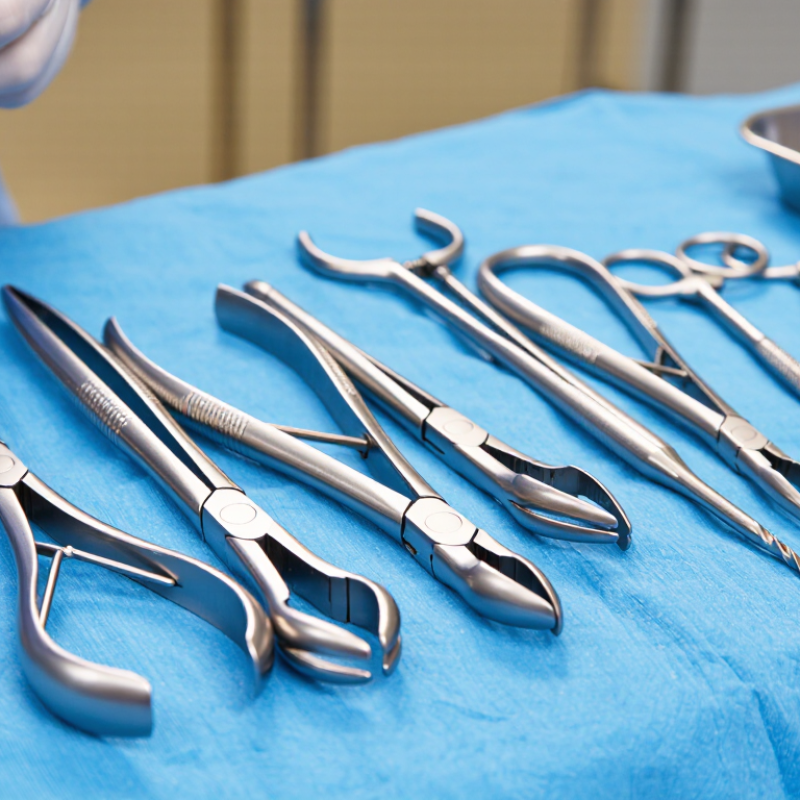
Orthopedic procedures demand steady hands, clear visibility, and instruments that perform as intended. A bone rongeur should bite cleanly; a driver should engage the screw without slipping. These details are not cosmetic. They shape control at the operating table and confidence across repeated use. Quality ortho instruments support consistent handling, dependable function, and careful reprocessing. They cannot guarantee a good outcome. Technique, training, and the wider care system matter too.
The risk context is significant. The World Health Organization’s 2016 Global Guidelines for the Prevention of Surgical Site Infection report a pooled surgical-site infection incidence of 11.2 per 100 patients in low- and middle-income countries. That figure covers surgery broadly, not orthopedic procedures alone. Still, it underscores why every part of safe practice deserves attention. Instrument quality is one part of that picture, alongside sterilization and sound clinical protocols. ISO 7153-1:2016 also specifies requirements for metallic materials used in surgical instruments, reflecting the importance of suitable materials and performance.
Surgeon and patient-safety researcher Atul Gawande wrote, “The volume and complexity of what we know has exceeded our individual ability to deliver its benefits correctly, safely, or reliably.” His point reaches beyond any single tool. A well-made instrument helps, but inspection and maintenance remain essential. Small wear can be easy to miss. That deserves a second look. A credible evaluation considers design, materials, fit, durability, and reprocessing—not just the catalogue description.
What Defines Quality in Orthopedic Instruments?
What Defines Quality in Orthopedic Instruments?
Quality begins with material integrity, precise geometry, and dependable performance after repeated cleaning and sterilization. ISO 7153-1:2016 identifies metallic materials used in surgical instruments, including stainless steels selected for strength and corrosion resistance. But the alloy alone is not enough. A bone rongeur should open smoothly, hold its alignment, and cut cleanly without leaving rough edges. A drill guide needs a stable grip and accurately positioned openings. Small defects matter.
Surface finish and joint design affect cleaning, inspection, and handling. Instruments should tolerate their validated reprocessing cycles, while labels and traceability help teams identify damage or maintenance needs. The World Health Organization’s Global Guidelines for the Prevention of Surgical Site Infection report pooled infection rates of 11.8% in low- and middle-income settings, compared with 2.9% in high-income settings. These figures reflect many factors; they do not prove that instrument quality alone changes infection risk. Still, they underline why reliable cleaning and sterile processing deserve attention. No single test captures everything. A polished surface can still hide a loose hinge, and a sharp edge can dull sooner than expected. Quality needs documented testing, routine inspection, and honest review of instrument performance in actual use.
| Quality Dimension | What Defines Quality | How It Can Be Assessed | Why It Matters |
|---|---|---|---|
| Material and construction | Materials are suitable for the instrument’s intended function and are supported by documented specifications. Stainless-steel surgical instruments are covered by material specifications such as ISO 7153-1 and ASTM F899. | Review material and manufacturing documentation; inspect for cracks, deformation, rough edges, or inconsistent construction. | Appropriate materials and sound construction help an instrument withstand its intended use and repeated processing when designed for reuse. |
| Function and mechanical performance | Working ends, joints, locks, and handles operate smoothly and consistently for the instrument’s intended task. | Check alignment, jaw engagement, ratchet action, hinge movement, and cutting or holding performance against the instrument’s specifications. | Reliable function supports controlled handling and helps reduce the risk of instrument slippage, ineffective performance, or procedure delays. |
| Dimensional accuracy | Critical dimensions and tolerances conform to the applicable design and manufacturing specifications. | Use documented inspection methods and suitable measuring equipment for features such as length, jaw geometry, and alignment. | Consistent dimensions help ensure instruments fit their intended use and work predictably with compatible components. |
| Surface finish and corrosion resistance | Surfaces are free from defects that could interfere with function or cleaning, and the instrument is suitable for its specified processing conditions. | Inspect surfaces and joints; assess corrosion and resistance to repeated processing using applicable requirements, including ISO 13402 where relevant. | Corrosion, pitting, or damaged surfaces can compromise usability and make effective cleaning more difficult. |
| Ergonomics and handling | Handles and controls provide a secure, practical grip and allow the user to manipulate the instrument as intended. | Evaluate grip, balance, control access, and ease of operation in a usability assessment appropriate to the instrument. | Good handling can support precise control and reduce unnecessary effort during use. |
| Cleanability and processing compatibility | Reusable instruments are designed and documented for cleaning, disinfection, and sterilization processes specified by the manufacturer. | Review the manufacturer’s processing instructions and assess whether joints, channels, and other features can be cleaned as directed. ISO 17664-1 addresses information for processing medical devices. | Effective reprocessing is essential for reusable instruments; design and clear instructions help healthcare facilities process them appropriately. |
| Durability and maintenance | Performance remains within specified limits over the instrument’s intended service life when it is used and maintained as instructed. | Review inspection, maintenance, repair, and retirement guidance; monitor wear, looseness, and changes in function. | Routine checks can identify deterioration before it affects performance and help support appropriate replacement decisions. |
| Traceability and documentation | Product identification, applicable instructions, and relevant quality records are available and consistent with the instrument’s intended use. | Check labeling, instructions for use, lot or serial identification where applicable, and supporting technical documentation. | Clear documentation supports correct selection, handling, processing, and investigation of quality issues. |
Note: Acceptance criteria depend on the instrument type, intended use, and applicable regulations and standards. No single material, test, or service-life figure defines quality for every orthopedic instrument.
Related Posts
-
What Are Ortho Instruments and How Are They Used?
-
What Are the 2026 Top Types of Ortho Instruments for Buyers?
-
How to Choose the Right Orthopedic Instruments?
-
How to Choose Orthopedic Surgical Instruments?
-
What Are Orthopedic Implants and Instruments?
-

2026 Best Orthopedic Plates for Enhanced Healing and Recovery?