2026 Top Types of Orthopedic Implants for Global Buyers
Global buyers assess orthopedic implants through more than catalog prices. They compare clinical use, materials, service life, and supplier support. The scale is substantial: Grand View Research estimated the global orthopedic implants market at approximately USD 46.6 billion in 2023, with continued growth projected through 2030. The World Health Organization reports that about 1.71 billion people live with musculoskeletal conditions, creating a broad need for effective care. These figures describe different things: one tracks market value; the other, health burden.
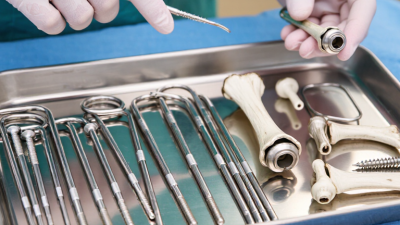
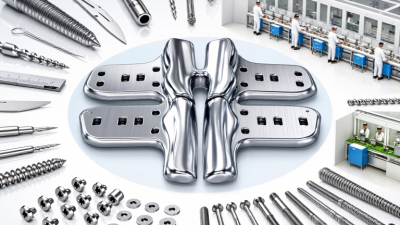
This guide examines major implant types, including joint reconstruction systems, spinal implants, and trauma-fixation devices. A titanium plate beside a fractured-bone model illustrates one practical distinction: implants serve different anatomical problems and surgical goals. Material names alone do not establish suitability. Design, clinical evidence, manufacturing quality, and patient factors matter too. Still, a gap remains: market growth does not prove that every product delivers better outcomes.
Orthopaedic surgeon and researcher Kevin J. Bozic has emphasized value-based care, which judges treatment by patient outcomes relative to cost. That perspective is useful when comparing implants, though it cannot replace product-specific evidence. Buyers should examine documented performance, traceability, and supplier responsiveness, then verify claims against reputable clinical and regulatory sources. This overview is a starting point, not a clinical recommendation. Choosing well takes evidence.
Orthopedic Implant Basics: WHO Estimates 1.71B People Have Musculoskeletal Conditions
WHO estimates that 1.71 billion people worldwide live with musculoskeletal conditions. This broad group includes back pain, osteoarthritis, fractures, and other disorders affecting movement. The scale is striking. Yet this figure does not mean that 1.71 billion people need an implant. Many conditions can be managed with rehabilitation, medication, or assistive devices. Surgery is considered when symptoms and structural damage warrant it, following clinical assessment.
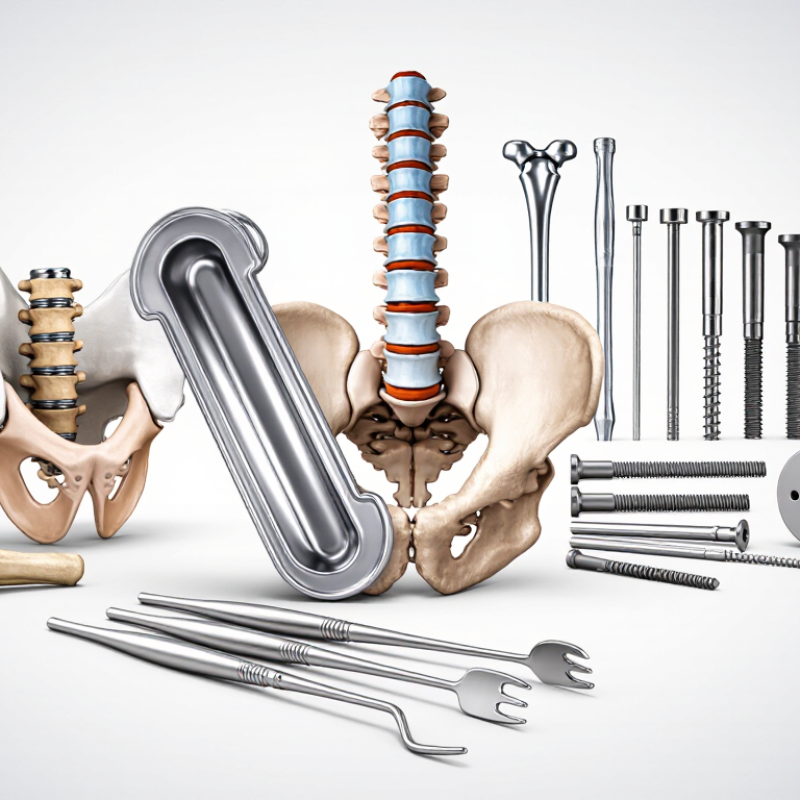
For patients who need reconstruction, implant choice depends on the bone involved, injury pattern, age, activity, and overall health. Common options include hip and knee replacements, fracture plates and screws, spinal fixation systems, and long-bone nails. A surgeon may review X-rays or CT images and assess stability, fit, and expected loading. A small mismatch can affect comfort or healing.
Global buyers should look beyond a product’s name. Clear material and sizing information, traceability, sterilization records, and evidence supporting intended use all matter. These details count in operating rooms, where teams may handle several sizes under time pressure. Procurement also depends on local clinical practice and follow-up capacity. There is no single best implant for every setting. It is not simple.
Major Implant Families: Joint Replacement, Trauma Fixation, Spine, and Sports Medicine
Joint replacement, trauma fixation, spine, and sports medicine form four distinct implant families. The World Health Organization reported that 528 million people lived with osteoarthritis in 2019; 365 million had knee osteoarthritis (WHO, Osteoarthritis fact sheet, 2023). This signals substantial clinical need, but it is not a direct forecast of implant sales. OECD’s Health at a Glance 2023 also documents wide variation in joint-replacement activity across health systems.
Joint replacement includes hip and knee components, where fit, bearing surfaces, and surgical compatibility matter.
Trauma fixation uses plates, screws, nails, and wires to stabilize fractures; a small screw’s geometry can affect placement.
Spine systems include rods, screws, cages, and artificial discs, selected for the procedure and anatomy.
Sports medicine implants, such as anchors and interference screws, support ligament or tendon repair.
The neat taxonomy is useful, but purchasing decisions rarely stay neat. Procedure mix and clinician preference can reshape demand.
Tips: Compare implant families by indication, material, size range, and instrument needs. Check whether product documentation supports the intended use, and confirm local registration and supply requirements. Ask for evidence on performance and sterilization compatibility. A catalog can look complete while missing sizes surgeons actually request. Check that detail early.
Implant Materials: ASTM F136 Specifies Ti-6Al-4V ELI for Surgical Implants
ASTM F136 specifies wrought Ti-6Al-4V ELI, an extra-low-interstitial titanium alloy intended for surgical implants. Its nominal composition is 6% aluminum and 4% vanadium, with titanium forming the balance. The ELI grade limits certain interstitial elements, helping manufacturers control material properties across production batches. That matters when an implant must withstand repeated loading inside the body. Still, a material standard is not a performance guarantee. Implant geometry, processing, surface finish, and clinical use all affect outcomes.
Demand sits within a substantial health burden: the World Health Organization estimated that 528 million people lived with osteoarthritis in 2019 (WHO, “Osteoarthritis,” 2023).
For buyers comparing orthopedic materials, Ti-6Al-4V ELI offers a useful combination of strength, corrosion resistance, and established implant use. Check that supplier documentation identifies ASTM F136, the material condition, and traceable test results. Ask for composition and mechanical-property reports, not just a certificate headline.
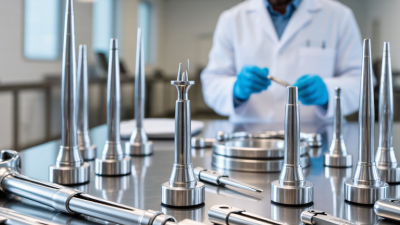
Small differences matter. A polished sample can look convincing, yet it cannot show how the full production lot was controlled. Nor does ASTM F136 alone validate a finished implant’s design, sterilization, or clinical suitability.
Spinal Devices Explained: Compare Fusion Systems, Disc Replacements, and Fixation
Spinal implants address different mechanical needs. Fusion systems use cages, bone graft, screws, or rods to limit movement while vertebrae heal together. They may suit instability or painful motion, but fusion changes load distribution and does not guarantee symptom relief. Disc replacements aim to preserve movement at a selected spinal level. Patient anatomy, bone quality, and the condition of nearby joints matter; they are not suitable for every case. The distinction sounds simple. The decision rarely is.
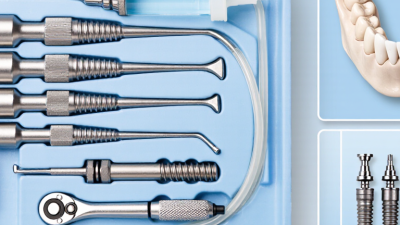
Fixation devices, including pedicle screws and connecting rods, help hold spinal segments in position. They may support fusion or stabilize a fracture, depending on the surgical plan. For global buyers, compare implant materials, size ranges, instrument compatibility, sterilization information, traceability, and clinical evidence. Check that documentation matches the intended use and local requirements. A broad catalog is useful, but it cannot replace clear evidence or surgeon assessment.
Tips: Ask for device specifications, surgical technique guides, and evidence relevant to the intended procedure. Confirm compatible instruments and available sizes before procurement. Avoid treating “motion-preserving” or “stronger” as proof of better outcomes; those claims need context. I would also revisit assumptions when evidence is limited.
Global Buyer Checks: Verify ISO 13485 Quality Systems and ISO 10993 Biocompatibility
When sourcing orthopedic implants, treat quality certificates as a starting point, not a guarantee. ISO 13485 indicates a quality management system for medical devices, but it does not prove that every implant performs safely or effectively. Check the certificate’s validity, covered manufacturing site, and scope. Does it include the implant type and key production steps you plan to purchase? Ask how outsourced machining, cleaning, and packaging are controlled. Paperwork matters.
For biocompatibility, request an ISO 10993 evaluation relevant to the finished device and its intended use. Implant materials, surface treatments, manufacturing residues, and sterilization can all affect the assessment. Contact type and duration matter, too. Review the rationale, test reports, and any material changes—not just a one-line compliance claim. If a supplier provides results for a raw material, ask whether they address the final processed implant. This detail is easy to miss.
Tips: Match supplier records to the exact product, site, and revision. Confirm traceability from material lot to finished device, and ask how complaints or process changes are handled. If a report is unclear, ask a qualified regulatory or clinical expert to review it. A tidy certificate file is reassuring, but it can still leave gaps.